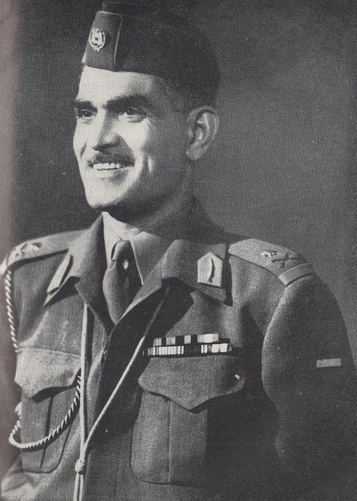
Abd al-Karim Qasim 1914 – 1963
Biography
Brigadier Abd al-Karim Qasim transformed Iraq from monarchy to republic, seizing power through military force and becoming the nation’s first prime minister in the post-royal era. His ascent through the Iraqi Army ranks positioned him at the epicenter of mid-century Middle Eastern politics, where nationalist fervor and Cold War tensions collided. Qasim embodied the revolutionary energy of his time—a military strongman who reshaped institutional power and redefined Iraq’s political identity overnight.
His tenure proved as turbulent as it was consequential. Qasim navigated treacherous internal factions, regional rivalries, and the ideological upheaval that consumed Iraq during the early 1960s. Though his reforms sparked fierce debate, his imprint on Iraqi governance remained indelible—a leader who dared to upend centuries of established order.
On February 9, 1963, Qasim was assassinated by gunshot in Baghdad, the city where he’d spent his entire life reshaping a nation. His violent death marked the abrupt end of a career spent commanding power’s highest stakes. Qasim left behind a polarized legacy—reviled by monarchists, celebrated by revolutionaries—cementing his place as one of the twentieth century’s most consequential Iraqi figures.