Fritz Erler 1868 – 1940
Biography
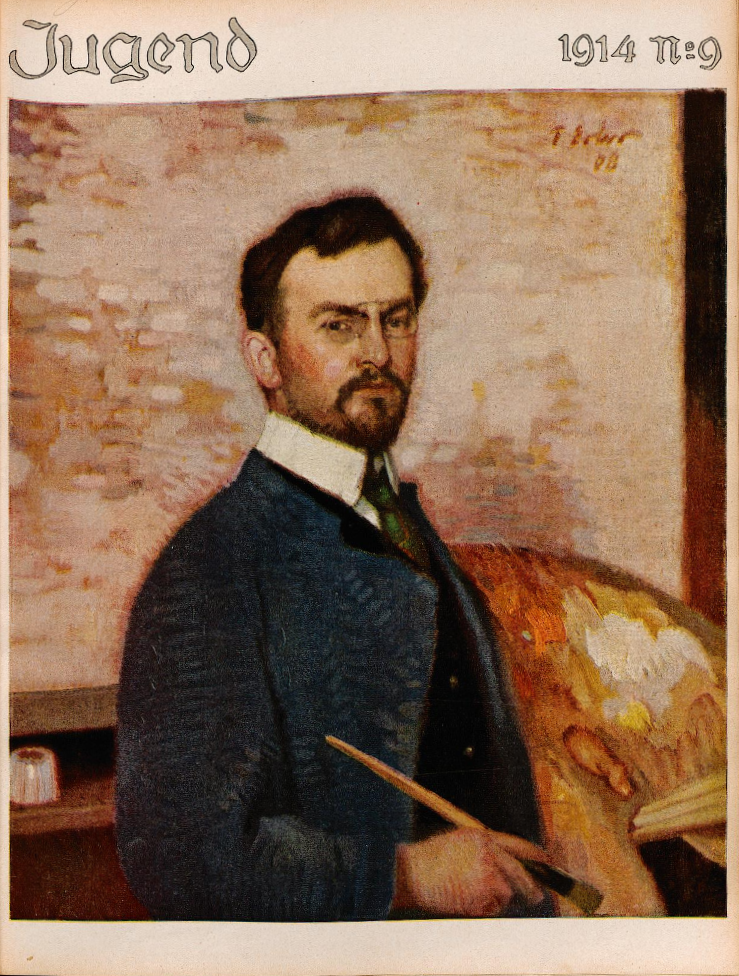
Fritz Erler commanded German art circles as a painter, illustrator, and designer whose distinctive aesthetic defined turn-of-the-century visual culture. Born in 1868 in Ząbkowice Śląskie, Erler developed a reputation for striking compositions that blended fine art with commercial design—a daring move when such boundaries were rigidly policed. His work captured the imagination of Berlin’s artistic elite and established him as a major creative force during the German Empire’s final decades.
Erler’s prolific career spanned multiple disciplines, from easel paintings to large-scale illustrations that appeared in prestigious publications. His versatility across mediums made him invaluable to Germany’s emerging modern design movement, where he helped legitimize illustration as serious artistic practice. Working through sweeping cultural transformations—from Imperial Germany through Weimar and into the Nazi era—Erler maintained his creative output in Munich, where he spent his final years. He died there in 1940, leaving behind a substantial body of work that reflected the ambitions and contradictions of his turbulent era.