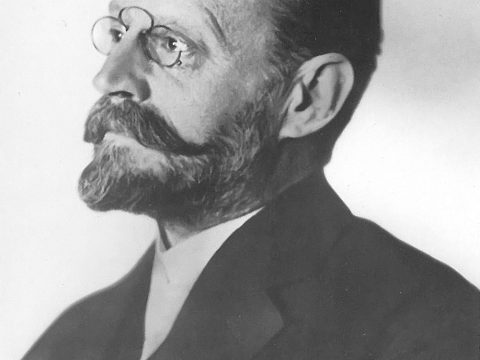
Paul Gottlieb Nipkow 1860 – 1940
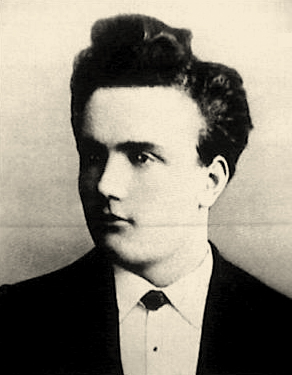
Biography
Born in Polish Lębork in 1860, Paul Gottlieb Nipkow became the visionary German technician whose mechanical innovation fundamentally transformed how the world would see. His invention—a rotating disk with a spiral pattern of holes—solved a puzzle that had stumped scientists for decades: how to break down and transmit images electronically. That elegant solution would become the technological backbone of television for generations, earning Nipkow a place among history’s most consequential inventors.
Working in Germany during an era of breathless scientific progress, Nipkow embodied the problem-solving ingenuity of late nineteenth-century innovation. His disk didn’t just represent a clever engineering trick—it opened an entirely new frontier of communication technology, proving that practical creativity could reshape human connection. While others theorized, Nipkow built the bridge between vision and reality.
He spent his final decades watching his invention evolve from laboratory curiosity into cultural phenomenon. Nipkow died in Berlin in 1940 at eighty, resting at Pankow III cemetery. His legacy transcends the machine itself: he gave technology its eyes, fundamentally altering how humanity would experience the world.
Cemetery Map
View larger map →Satellite overview of the cemetery grounds.