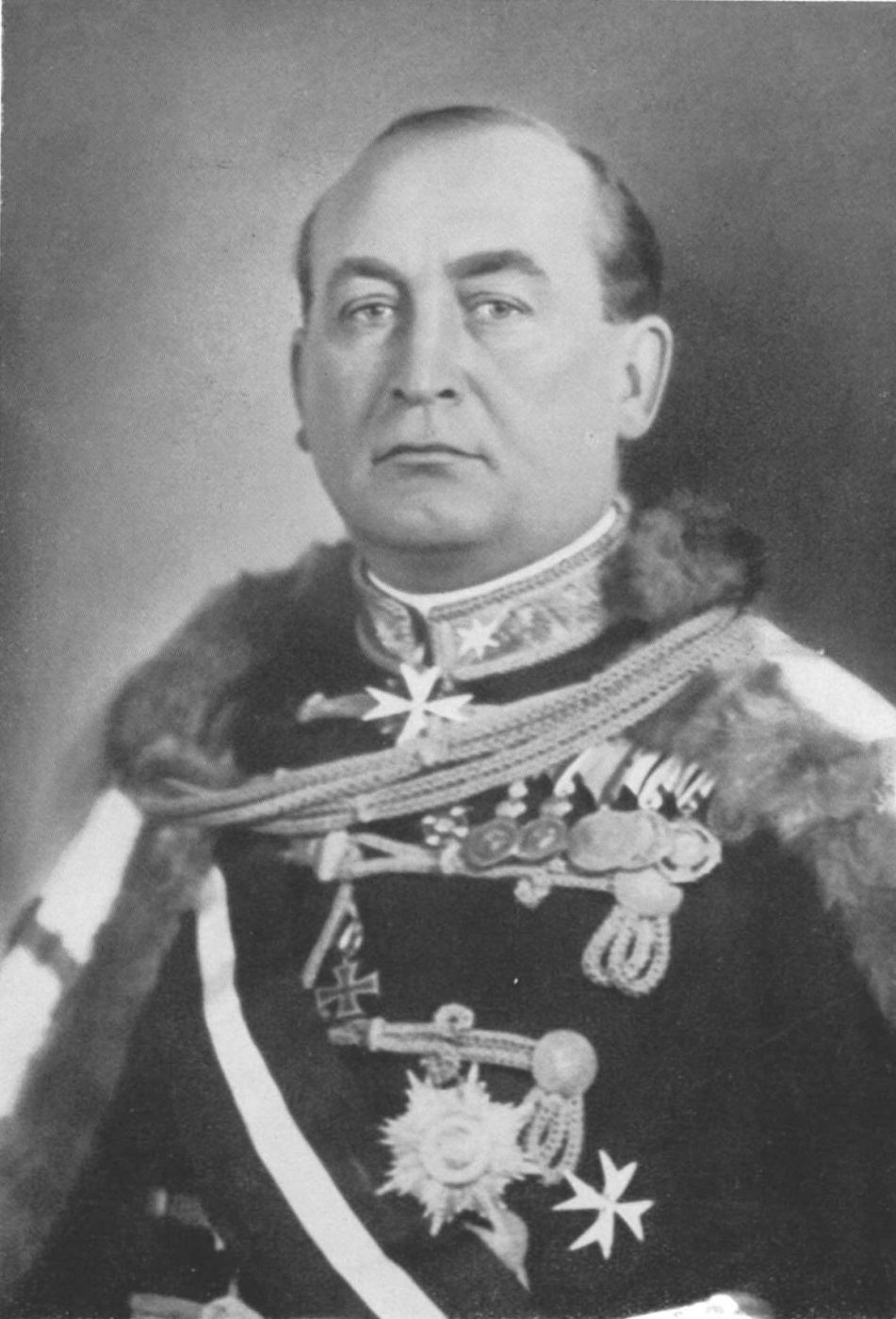
Gyula Gömbös 1886 – 1936
Biography
Born into Hungary’s turbulent early twentieth century, Gyula Gömbös emerged as a commanding force in his nation’s political landscape, wielding considerable influence over government affairs during the volatile interwar years. His political philosophy became emblematic of the ideological currents sweeping through Central Europe, shaping not just his own governance but Hungary’s trajectory through one of history’s most transformative periods.
Gömbös ascended to positions of genuine power and responsibility, his vision for Hungary’s future becoming woven into the fabric of the era’s political discourse. Whether through policy or ideology, he left an indelible mark on Hungarian political thought, embodying the complexities and convictions of interwar Europe.
His life was cut short on October 6, 1936, when kidney disease claimed him in Munich at just forty-nine. He was laid to rest at Fiume Road Graveyard in Budapest, remembered as a pivotal figure who navigated—and helped define—one of Hungary’s most consequential decades.
Cemetery Map
View larger map →Satellite overview of the cemetery grounds.