Chevalier de Saint-Georges 1745 – 1799
Biography
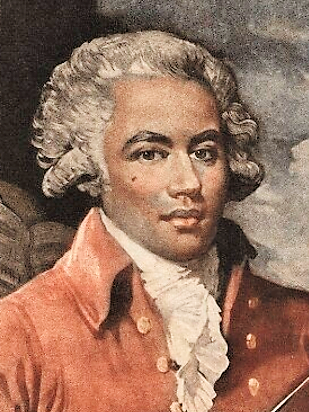
Born on Christmas Day 1745 in the Caribbean island of Guadeloupe, Joseph Bologne—the Chevalier de Saint-Georges—became eighteenth-century Europe’s most dazzling musical virtuoso. A prodigiously gifted violinist and composer, he captivated aristocratic audiences across the continent with performances that established him among the era’s finest instrumentalists. His symphonies and chamber works showcased a compositional genius that rivaled his peers, yet his rise through French musical circles remained a feat of extraordinary determination during a deeply prejudiced age.
The Chevalier wasn’t merely a one-dimensional talent. A master fencer of formidable skill, he embodied the Renaissance ideal of the complete gentleman—intellectually sophisticated, physically commanding, and artistically transcendent. Paris became his stage, where he conducted orchestras and commanded respect from Europe’s cultural elite. His dual mastery of blade and bow made him a legend in salons throughout the continent.
He died in Paris on June 10, 1799, at fifty-three, claimed by gangrene. Though burial records offer no trace of where he rests, the Chevalier’s imprint on eighteenth-century culture remained indelible—a pioneering figure whose musical brilliance and multifaceted genius challenged the boundaries of his world.