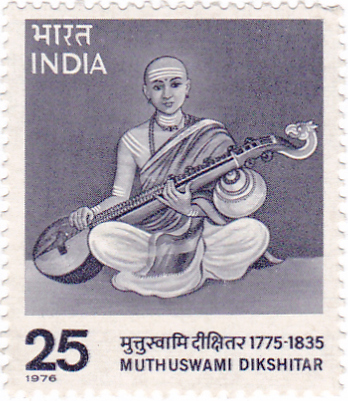
Muthuswami Dikshitar 1775 – 1835
Biography
Born into the sacred soundscape of Thiruvarur in 1775, Muthuswami Dikshitar emerged as one of South India’s most influential poet-composers during a golden age of regional artistry. He channeled the spiritual richness of his temple-town upbringing into works of stunning scholarly depth, crafting compositions that blended poetic elegance with musical sophistication. His creative genius flourished during a transformative moment when Indian classical music was experiencing a cultural renaissance across the subcontinent.
For six decades, Dikshitar remained devoted to his craft, producing poetry and musical works that seamlessly wove together intellectual rigor and artistic beauty. Operating during the late eighteenth and early nineteenth centuries, he became a towering figure whose influence extended far beyond his lifetime. His compositions reflected not just technical mastery but a profound understanding of both artistic tradition and emotional expression.
When Dikshitar passed in 1835 in Ettayapuram, he left behind a cultural legacy that would continue shaping Indian artistic expression for generations. His contributions to music and poetry established him as an essential architect of South India’s classical heritage—an artist whose vision transcended his era and remained embedded in the region’s artistic DNA.