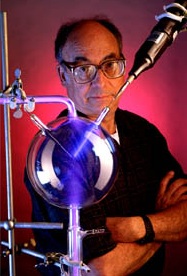
Ahmed Zewail 1946 – 2016

Biography
Born in Damanhur, Egypt, Ahmed Zewail transformed our understanding of chemistry at the molecular level. His groundbreaking work in femtochemistry—essentially photographing molecules during chemical reactions—earned him the Nobel Prize in Chemistry in 1999, cementing his status as one of science’s most influential figures. Zewail’s revolutionary techniques allowed scientists to observe the ultrafast dynamics of molecular processes, fundamentally reshaping how chemists approach their field.
Beyond the laboratory, Zewail embodied the global scientist, splitting his career between Egypt and the United States while mentoring countless researchers who carried his methodologies forward. His contributions rippled across multiple disciplines, influencing everything from drug development to materials science. When spinal cord lymphoma claimed his life on August 2, 2016, at seventy in Pasadena, the scientific community lost not just a visionary, but an inspiration to generations of chemists worldwide.
Zewail returned to his homeland for burial in 6th of October City, Egypt—a fitting homecoming for a man who never lost sight of his roots despite achieving international acclaim. His legacy endures through his discoveries and the countless scientists he shaped.
Cemetery Map
View larger map →Satellite overview of the cemetery grounds.