Albert I, Duke of Bavaria 1336 – 1404
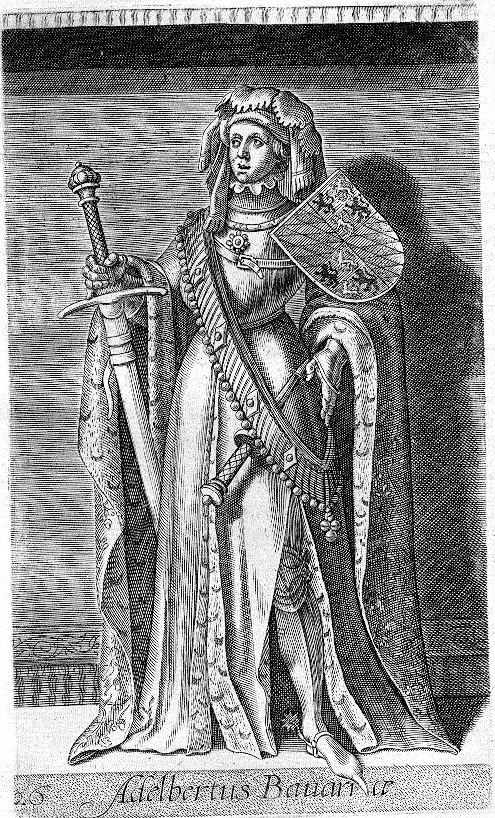
Biography
Born into medieval royalty in 1336 Munich, Albert I became one of northwestern Europe’s most powerful nobles, commanding vast territories across the Low Countries. As Count of Hainaut, Holland, and Zeeland, he presided over some of the era’s most economically vital regions during a turbulent century of political upheaval. His sprawling holdings—accumulated through strategic marriages and inheritance—made him a major player in the intricate power games that defined 14th-century European nobility.
Albert’s nearly seven-decade reign positioned him as a steady force through waves of medieval transformation. While the specifics of his greatest triumphs and struggles remain locked in history’s vault, his dominion over multiple counties demonstrates the kind of political savvy required to maintain power across such diverse territories. He navigated the treacherous waters of regional conflict and dynastic maneuvering that could topple lesser nobles.
When Albert died in The Hague in 1404, he left behind a legacy of longevity rare for his era. Buried in the very heart of his Holland domain, he represented an older generation of medieval power—the kind built on land, lineage, and the patient accumulation of influence across generations.
More Images

Cemetery Map
View larger map →Satellite overview of the cemetery grounds.