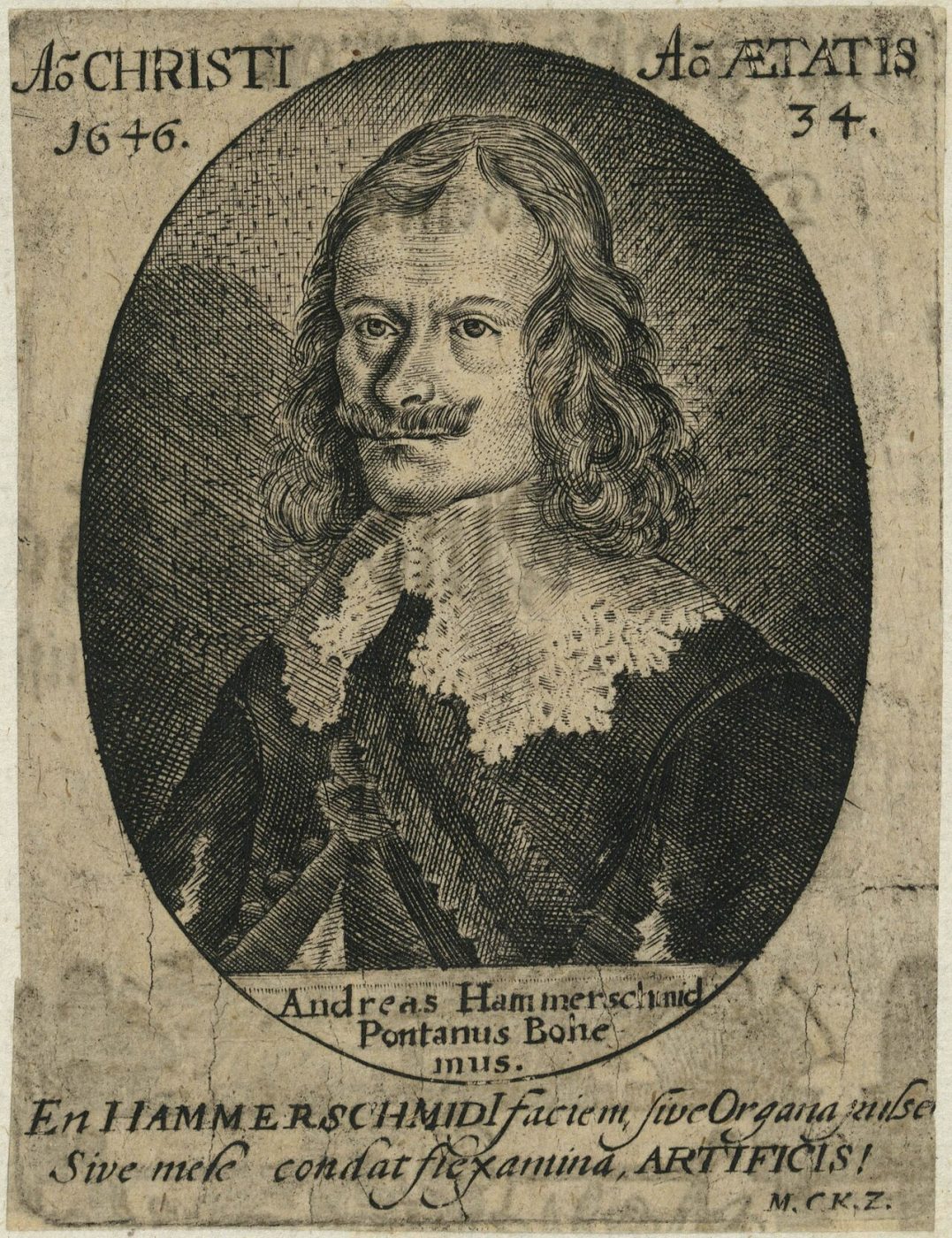
Andreas Hammerschmidt 1611 – 1675
Biography
Andreas Hammerschmidt was born on January 1, 1611, in Most, a town in the heart of Central Europe during a transformative period in music history. He devoted his life to composition and organ performance, becoming a respected figure in the musical traditions of his era. His career spanned more than six decades, during which he contributed significantly to the development of Baroque music across the regions where he lived and worked.
Hammerschmidt’s professional identity as both composer and organist reflected the dual talents often required of musicians during the seventeenth century. His work bridged Czech and German musical cultures, positioning him at an important crossroads of European artistic influence. Through his compositions and performances, he helped shape the musical landscape of his time, leaving an enduring mark on the communities he served.
On November 8, 1675, Hammerschmidt’s long and productive life came to an end in Zittau, the city where he had established his later career. Though the specific circumstances of his passing were not recorded for posterity, his legacy as a dedicated musician and composer remained. Andreas Hammerschmidt is remembered as a significant contributor to Baroque music, whose life and work connected different musical traditions across Central Europe.