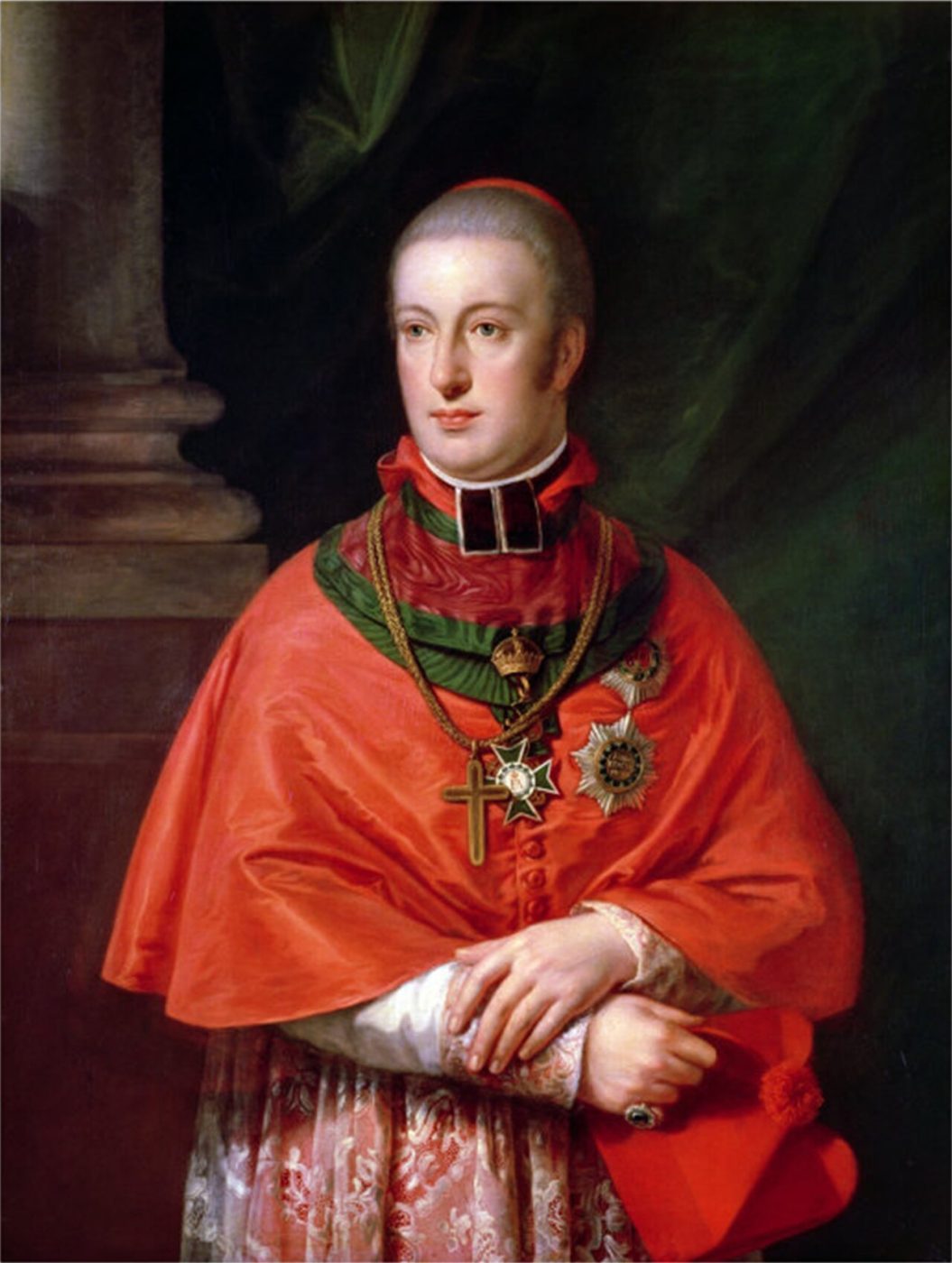
Archduke Rudolf of Austria 1788 – 1831
Biography
Born into Florentine luxury in 1788, Archduke Rudolf of Austria traded crowns for the collar, ascending to cardinal and becoming one of the Catholic Church’s most prominent princes. His dual identity—nobleman and man of the cloth—made him a rare fixture in early 19th-century Europe’s intersection of spiritual authority and royal power. Rudolf navigated the treacherous waters of Austro-Hungarian politics and ecclesiastical politics with the gravitas befitting his station.
As a cardinal, Rudolf commanded respect across Europe’s religious hierarchy during a turbulent era of shifting empires and faith. He embodied the old guard’s sacred-secular alliance, representing a disappearing world where the Church and nobility remained inseparably intertwined. His influence rippled through Austria’s spiritual leadership during the Napoleonic upheaval and beyond.
When Rudolf died in Baden in 1831, the Church and crown mourned alike. His final resting place—the venerable Saint Wenceslas Cathedral—cemented his legacy as a man who bridged two worlds with unwavering devotion. He remains a footnote in how European aristocracy once wielded faith as both conviction and instrument of power.
Cemetery Map
View larger map →Satellite overview of the cemetery grounds.