Arnaut Daniel 1150 – 1210
Biography
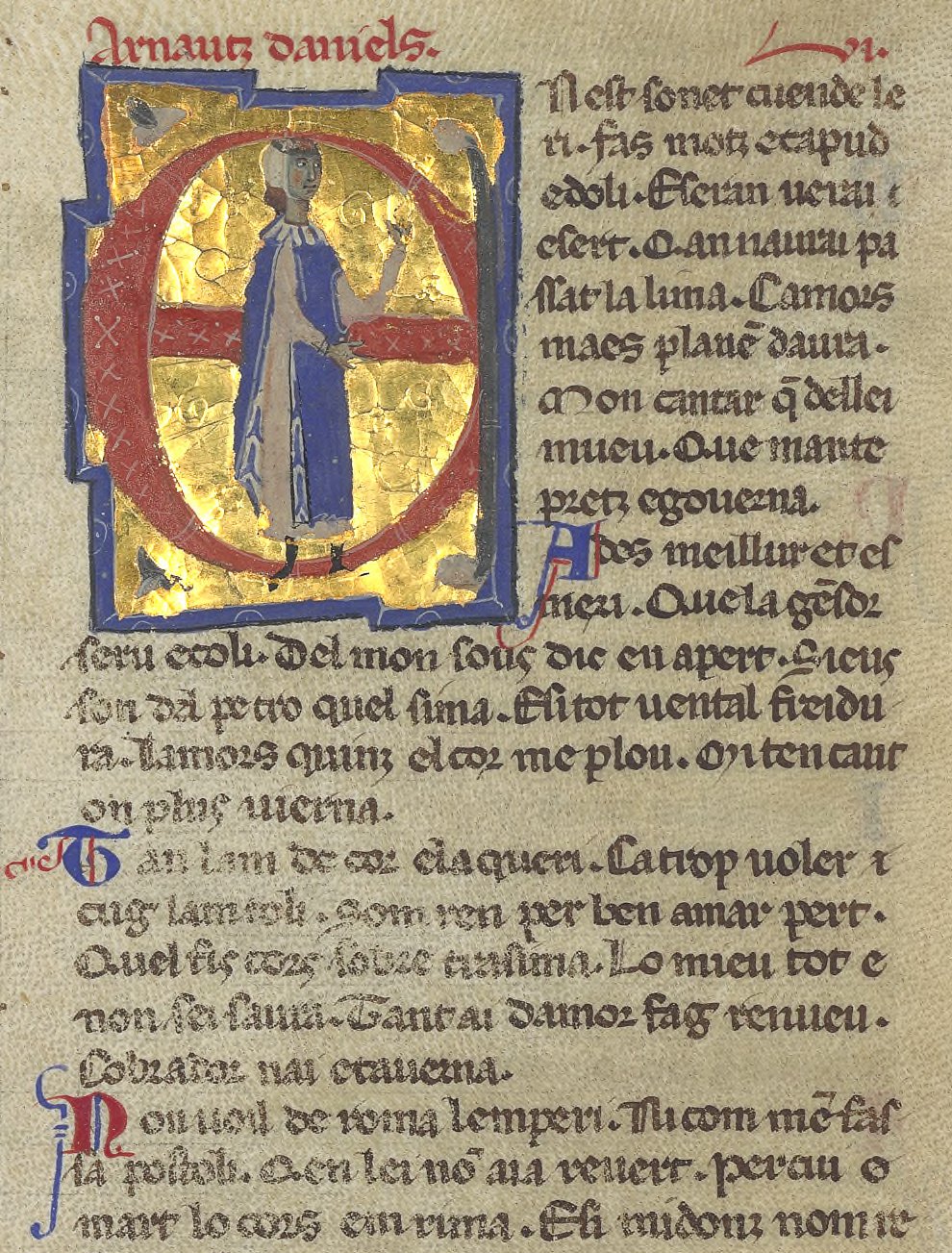
Medieval poetry’s most daring innovator, Arnaut Daniel revolutionized the troubadour tradition through sheer technical audacity. Born in 1150 in Ribérac, this Occitan master didn’t just compose love songs—he reinvented the very language of desire itself, crafting verses of such intricate complexity that fellow poets studied his techniques for centuries. His experiments with rhyme, rhythm, and wordplay pushed the boundaries of what lyric poetry could accomplish, earning him legendary status among Europe’s literary elite.
For six decades, Daniel commanded the courts of southern France, performing for nobility hungry for innovation. His work on courtly love transcended mere romantic convention; he transformed it into an art form of philosophical depth and linguistic brilliance. Every composition was a masterclass in artistic restraint and emotional precision, delivered in a regional language that would influence Romance literature across the continent.
When Daniel died in 1210 at sixty, he left behind a modest body of work—yet one so influential it shaped troubadour tradition indefinitely. Dante himself would later crown Daniel the supreme lyricist, cementing his legacy as the architect of medieval Occitan verse. In an age of aristocratic patronage and courtly spectacle, he proved that true mastery lay in the relentless perfection of form and language.