Augusta of Saxe-Weimar-Eisenach 1811 – 1890
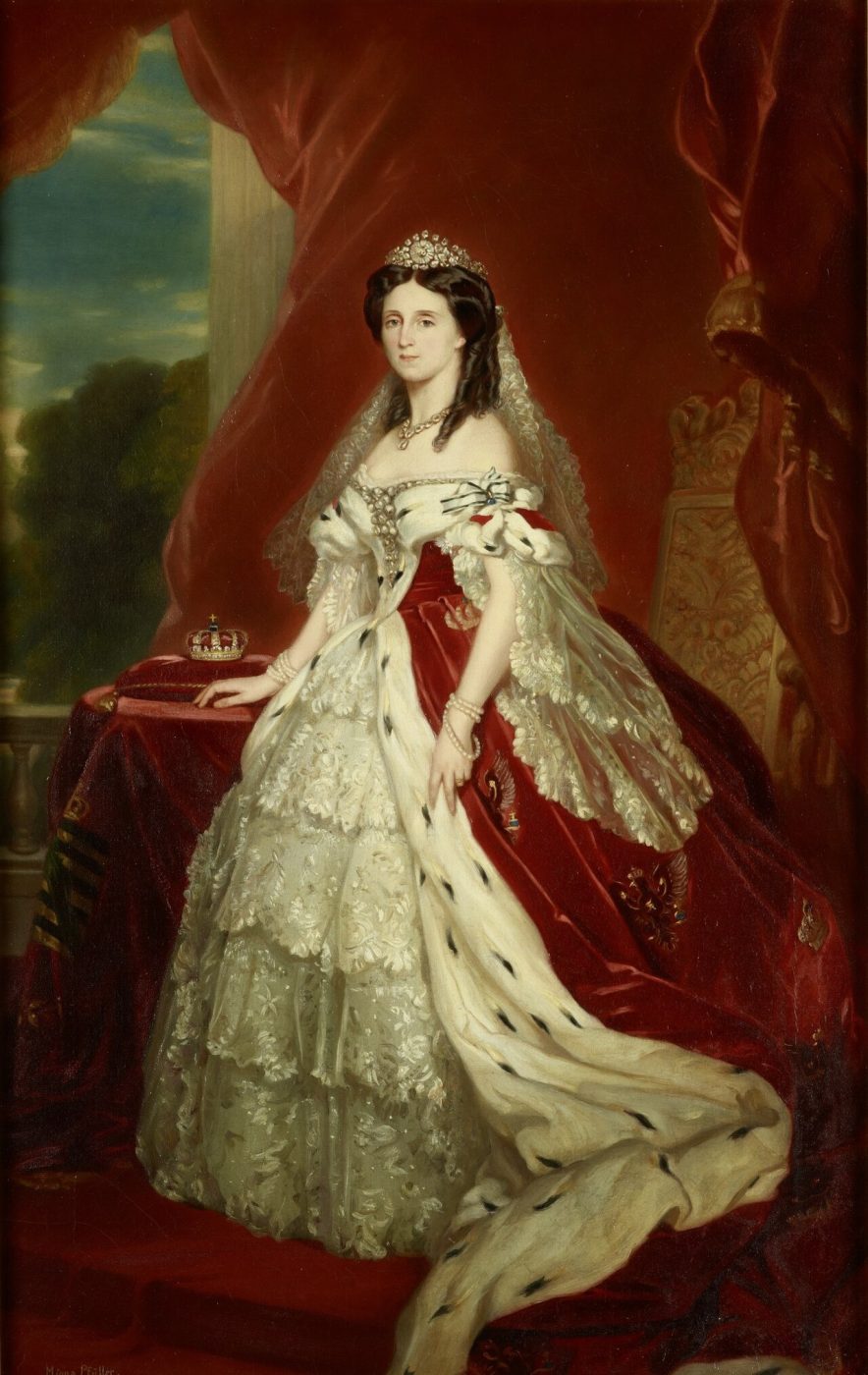
Biography
Born into Weimar’s glittering intellectual aristocracy in 1811, Augusta of Saxe-Weimar-Eisenach embodied the refined sophistication of one of Europe’s most culturally distinguished royal dynasties. She inherited a legacy steeped in German philosophy, the arts, and political influence—a weight she carried with the grace expected of European royalty at her station.
Her nearly eighty years unfolded across a continent in upheaval. Augusta witnessed the seismic shifts reshaping German identity and power, from Napoleonic aftermath through industrial revolution to unification itself. She stood as a living bridge between old-world courtly tradition and the modern European order emerging around her.
When influenza claimed her in Berlin on January 7, 1890, Augusta’s death marked the passing of an era. Berlin honored her with entombment in the revered mausoleum at Charlottenburg Park—a final resting place reserved only for those whose significance transcended ordinary nobility. She remained, even in death, emblematic of Saxe-Weimar’s enduring cultural prestige.
Cemetery Map
View larger map →Satellite overview of the cemetery grounds.