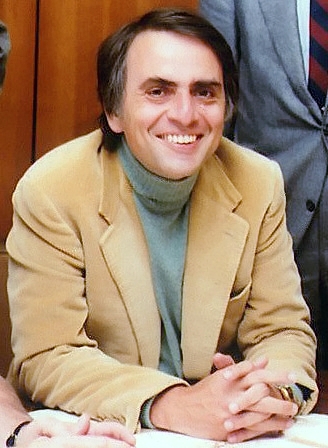
Carl Sagan 1934 – 1996
Biography
Carl Sagan transformed how we see ourselves in the universe—and how we talk about it. The Brooklyn-born astrophysicist became a cultural icon by doing something radical: explaining the cosmos in language everyone could understand. He didn’t just study distant galaxies; he made them matter to millions, proving that science could be thrilling without sacrificing truth.
Sagan’s gift was translation. While his peers wrote dense academic papers, he crafted television specials, bestselling books, and unforgettable metaphors that turned abstract physics into profound human questions. He bridged a chasm between the laboratory and the living room, convincing the world that understanding our place in the universe wasn’t just for scientists—it was essential for everyone.
He died in Seattle on December 20, 1996, at just 62, claimed by pneumonia. Yet his work endures, eternally archived in Lake View Cemetery in Ithaca. Sagan proved that a scientist could be a poet, that wonder and rigor weren’t opposites, and that reaching toward the stars could inspire us to look inward too.
More Images

Cemetery Map
View larger map →Satellite overview of the cemetery grounds.