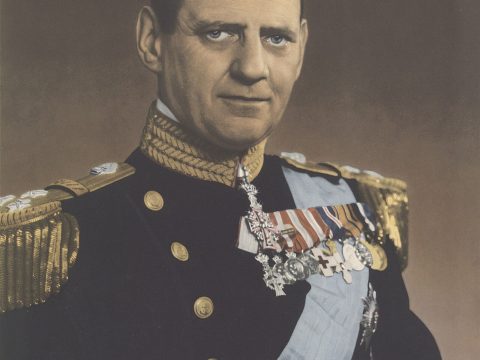
Carol I of Romania 1839 – 1914

Biography
Born in German obscurity, Carol I became the architect of modern Romania, transforming a fragmented region into a recognized European kingdom. Ascending to the throne in 1881, this Prussian prince spent over three decades orchestrating Romania’s consolidation and elevation on the continental stage. His reign coincided with Romania’s most formative years—a period when the young nation was still finding its footing among established powers. Carol I ruled from the opulent Peleș Castle, a architectural masterpiece that embodied the monarchy’s growing authority and ambition.
Carol I’s legacy rests on his unwavering commitment to nation-building during Europe’s most volatile century. He navigated complex alliances and internal challenges with calculated precision, positioning Romania as a player worthy of respect. When he died on October 10, 1914, at Peleș Castle, he left behind a kingdom fundamentally transformed from the one he’d inherited. His body was laid to rest at Curtea de Argeș Monastery, a shrine befitting a king who had devoted his entire adult life to forging Romanian greatness from the threads of regional discord.
More Images

Cemetery Map
View larger map →Satellite overview of the cemetery grounds.