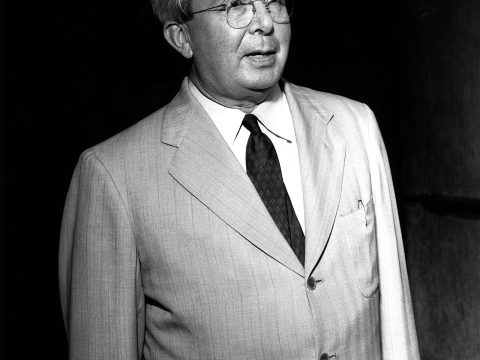
Charles Wheatstone 1802 – 1875

Biography
The man who electrified Victorian Britain didn’t just tinker in labs—he fundamentally rewired how his era communicated and understood the physical world. Charles Wheatstone emerged from Gloucester in 1802 as one of the nineteenth century’s most prolific scientific minds, turning theoretical physics into practical revolution. His innovations rippled across telegraphy, acoustics, and optics, making him an intellectual heavyweight during an age obsessed with progress.
Wheatstone embodied Victorian ingenuity at its finest, pursuing investigations that pushed the boundaries of what science could achieve. His name became synonymous with breakthrough after breakthrough, cementing his status as a cornerstone of British intellectual achievement. For nearly seventy-five years, he remained at the forefront of discovery, channeling the era’s spirit of relentless curiosity into tangible advancements that shaped modern communication.
When Wheatstone died in Paris on October 19, 1875, the scientific world lost a titan. Buried at Kensal Green Cemetery, his legacy transcended his lifetime, inspiring generations of inventors and scientists who built upon his foundational work.
Cemetery Map
View larger map →Satellite overview of the cemetery grounds.