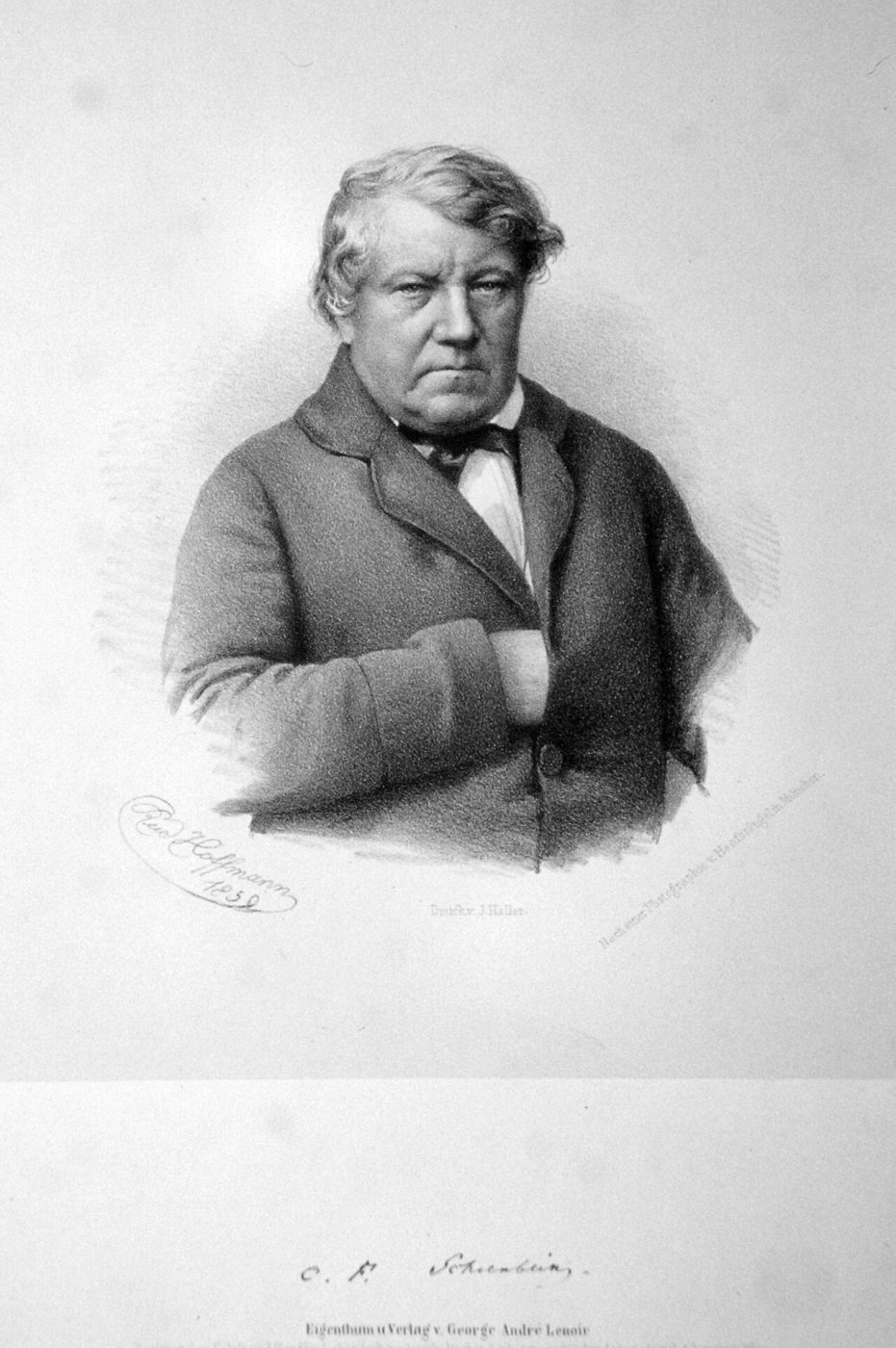
Christian Friedrich Schönbein 1799 – 1868
Biography
Born in Metzingen in 1799, Schönbein became the nineteenth century’s most electrifying chemist—literally. This German-Swiss scientist burst onto the scene with discoveries that smelled, exploded, and fundamentally changed how we understood the invisible world around us. His breakthrough identification of ozone revealed an entirely new atmospheric player, while his invention of guncotton—a potent explosive—proved that chemistry wasn’t just theoretical: it could reshape industry and warfare alike.
Schönbein’s career epitomized the golden age of hands-on science, when keen observation and fearless experimentation could unlock nature’s secrets. Working tirelessly in his laboratory, he pushed the boundaries of chemical knowledge, earning respect from peers across Europe. His contributions laid crucial groundwork for modern chemistry during an era of unprecedented scientific transformation.
When Schönbein died in 1868, he left behind a legacy of discovery that extended far beyond the lab. His work on ozone and guncotton demonstrated chemistry’s dual nature—beautiful and dangerous, theoretical and profoundly practical. Buried in Basel, Switzerland, Schönbein remains a towering figure in the story of scientific progress.
Cemetery Map
View larger map →Satellite overview of the cemetery grounds.