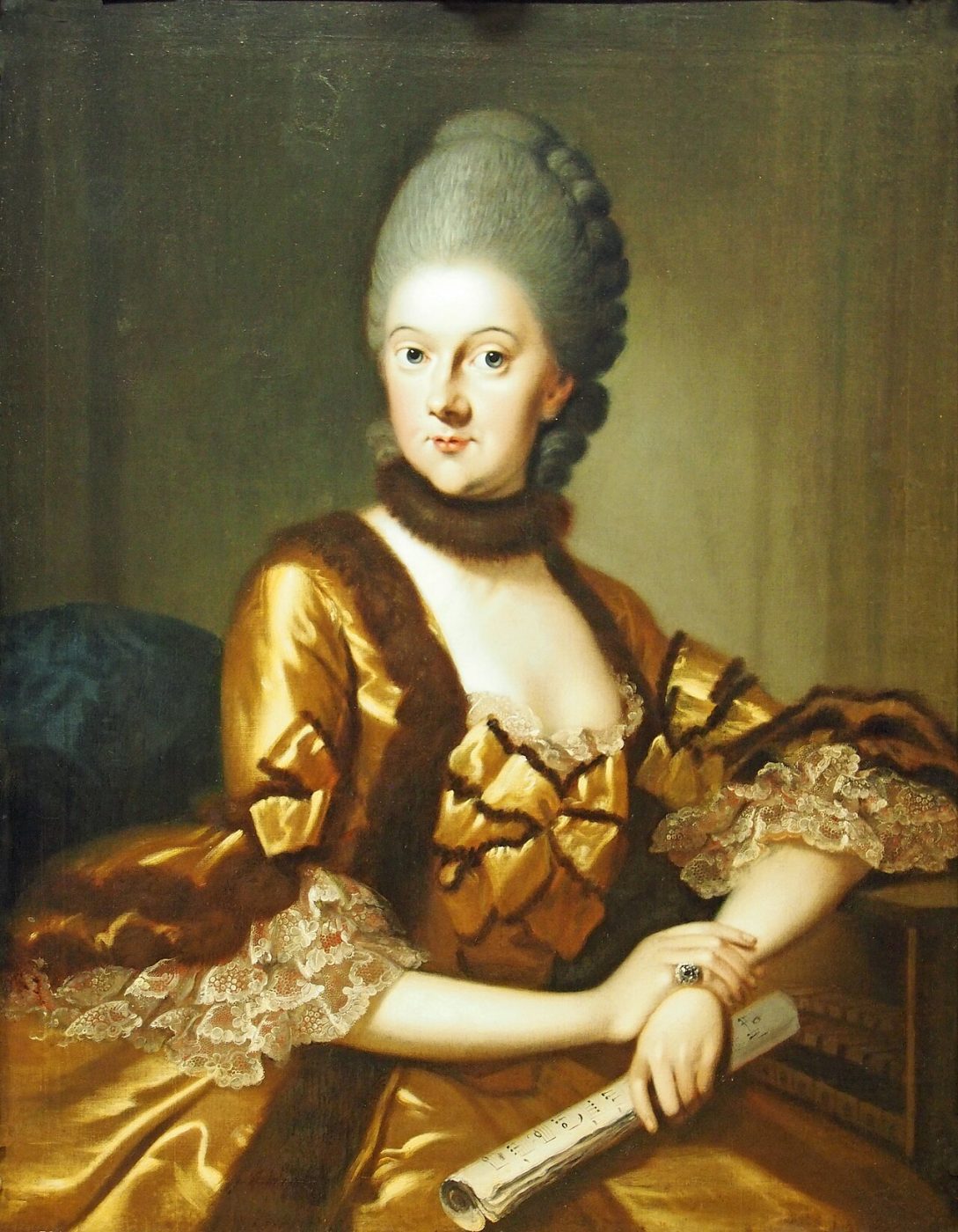
Duchess Anna Amalia of Brunswick-Wolfenbüttel 1739 – 1807
Biography
Born into German nobility’s golden age, Duchess Anna Amalia became one of eighteenth-century Europe’s most intellectually restless figures—a composer, editor, and cultural catalyst who refused to be merely ornamental. Her musical compositions gave voice to the artistic innovations of her era, while her meticulous editorial work preserved texts that might otherwise have vanished into history’s margins. She embodied the Enlightenment ideal of the cultivated aristocrat who viewed patronage and creation as inseparable.
Amalia’s later years in Weimar cemented her status as a guardian of German culture. While court life typically demanded decorative compliance, she instead built relationships with thinkers and artists, transforming her sphere into an intellectual hub. Her legacy transcends the typical footnote reserved for noble women of her century—she left behind actual artistic and scholarly work that mattered. When she died in 1807, the cultural landscape she’d helped shape bore her fingerprints.
Cemetery Map
View larger map →Satellite overview of the cemetery grounds.