Eugen Leviné 1883 – 1919
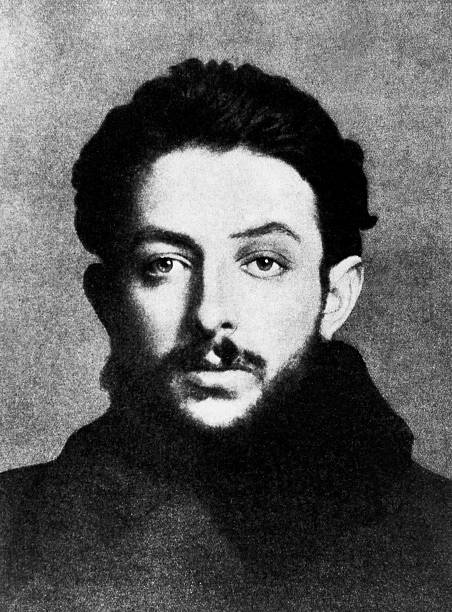
Biography
Eugen Leviné was born on May 23, 1883, in Saint Petersburg, Russia, during a time of great political upheaval across Europe. He would go on to become a significant figure in early twentieth-century German revolutionary politics, dedicating his life to radical social change during one of history’s most turbulent periods.
Leviné rose to prominence as a leading member of the Communist Party of Germany (KPD) and played a crucial role in the establishment of the Munich Soviet Republic, one of the most ambitious attempts at workers’ governance in post-World War I Germany. His leadership during this brief revolutionary period reflected his deep commitment to communist ideals and his vision for a transformed society.
On June 5, 1919, Leviné’s life came to an abrupt and tragic end when he was shot and killed while imprisoned in Munich. His death marked him as one of the revolution’s most notable casualties during the violent suppression that followed the collapse of the Soviet Republic. He was laid to rest at the Neuer Israelitischer Friedhof in Munich, where his memory endures as part of the complex legacy of early twentieth-century European radicalism and political struggle.
Cemetery Map
View larger map →Satellite overview of the cemetery grounds.