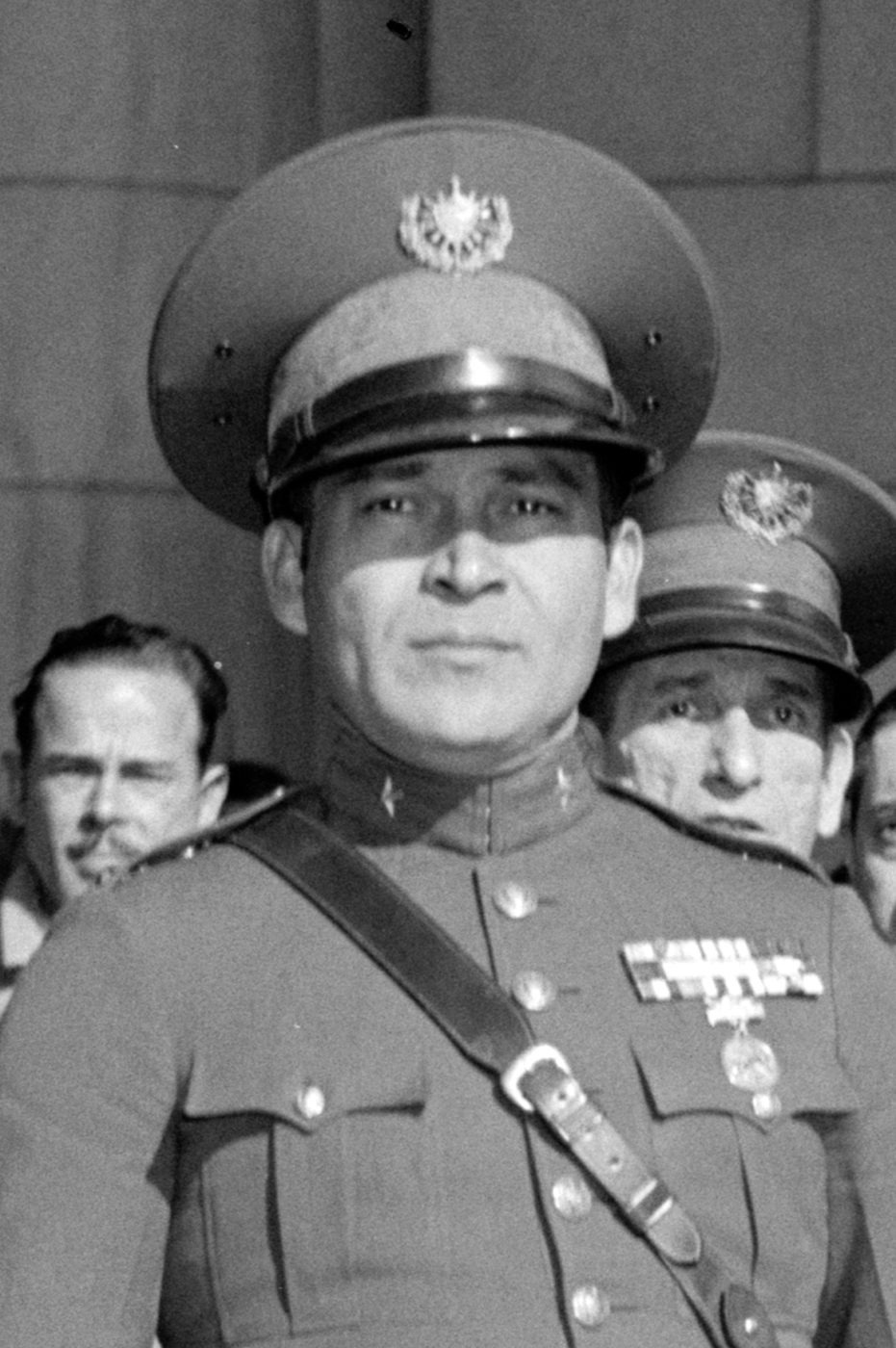
Fulgencio Batista 1901 – 1973
Biography
Fulgencio Batista rose from humble origins in eastern Cuba to become one of the Caribbean’s most polarizing political figures. His initial presidency from 1940 to 1944 positioned him as a transformative force during a critical period in Cuban development. But it was his dramatic return to power in 1952—seizing control as a dictator—that would cement his place in history and set the stage for one of the twentieth century’s most consequential revolutions.
Batista’s authoritarian rule lasted until 1959, when revolutionary forces fundamentally reshaped Cuba’s political landscape and forced him into exile. The era defined an entire generation and remains fiercely debated by historians and Cubans themselves. After leaving the island, Batista spent his final years in Spain, far from the nation whose destiny he had once controlled.
He died on August 6, 1973, in Marbella from a heart attack, ultimately laid to rest in Madrid’s San Isidro Cemetery. His complex legacy—marked by both modernization efforts and authoritarian brutality—continues to spark scholarly discourse and passionate public discussion across generations.
Cemetery Map
View larger map →Satellite overview of the cemetery grounds.