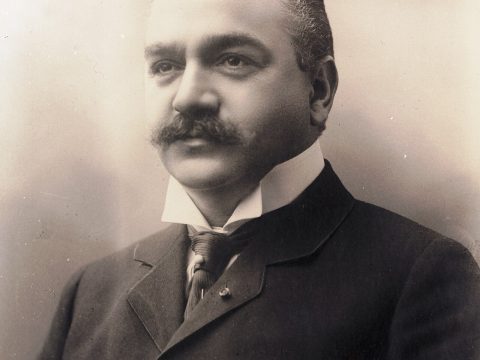
Gabriel Lippmann 1845 – 1921
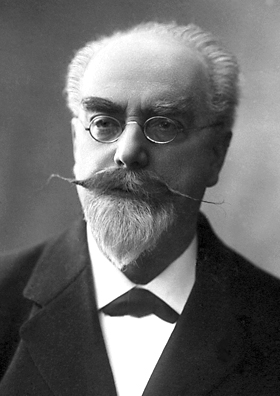
Biography
Gabriel Lippmann revolutionized how we see color—literally. The Luxembourg-born physicist cracked the code of color photography, developing a groundbreaking technique that captured the full spectrum without dyes or filters. His innovation earned him the Nobel Prize in Physics in 1908, cementing his place among history’s most visionary scientists. Working from his adopted home in France, Lippmann became a cornerstone of the French scientific establishment, pushing the boundaries of what physics could achieve.
For over seven decades, Lippmann remained devoted to unlocking nature’s secrets, channeling his considerable talent into experiments that bridged art and science. His work on electrocapillarity and color reproduction didn’t just advance physics—it transformed how the world could document and experience visual reality. Beyond the laboratory, he embodied the intellectual ambition that defined Belle Époque science.
Lippmann died at sea in 1921, his life ending during an Atlantic voyage. He was buried at Montparnasse Cemetery in Paris, among the luminaries of French culture and thought. His legacy endures in every color photograph ever taken.
Cemetery Map
View larger map →Satellite overview of the cemetery grounds.