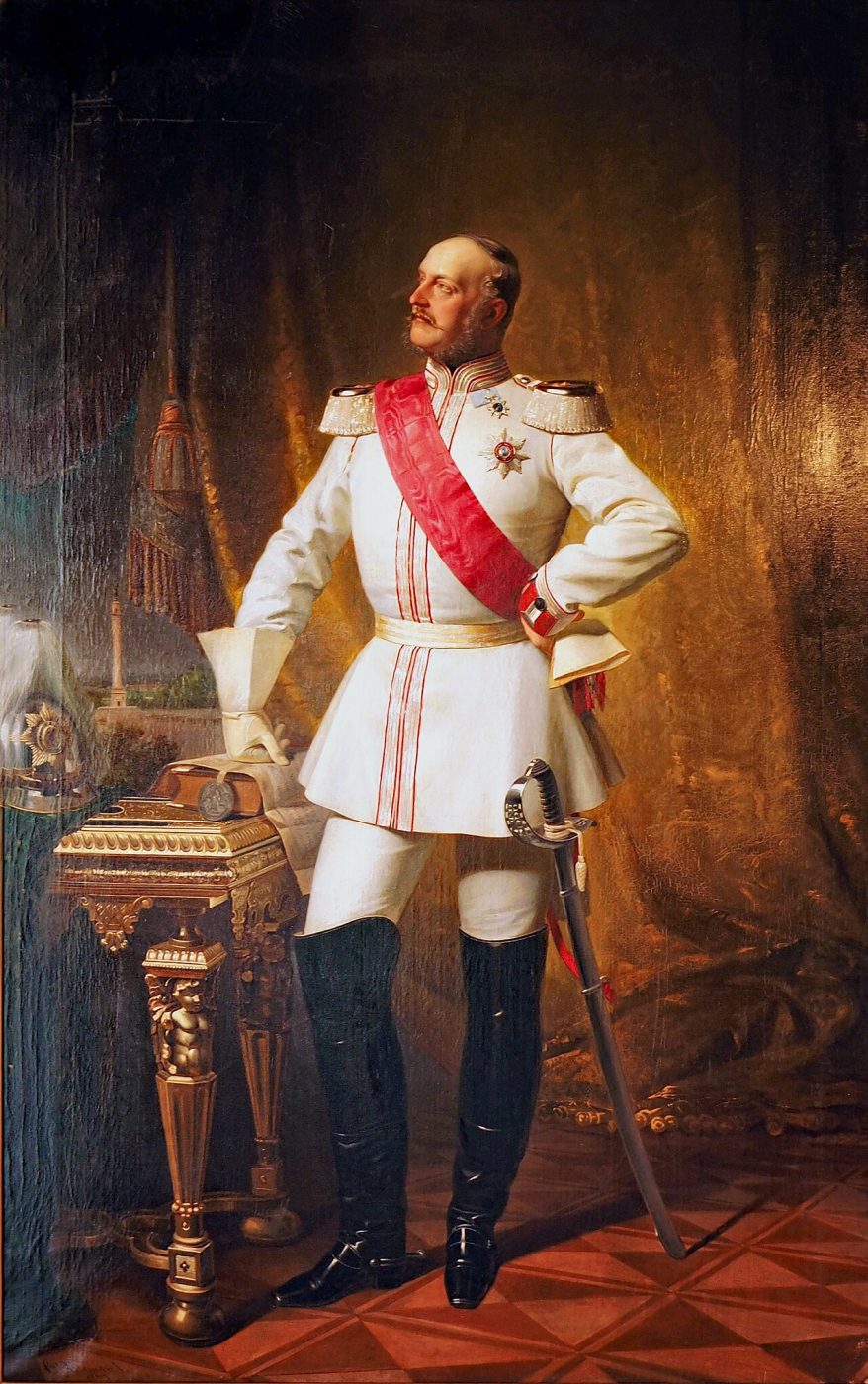
Georg V of Hanover 1819 – 1878
Biography
Born into Berlin’s glittering aristocratic world in 1819, Georg V commanded one of nineteenth-century Europe’s most consequential thrones—the Kingdom of Hanover. As king during an era of explosive political upheaval, he became the face of Old Europe’s struggle against the tide of German unification and Prussian dominance sweeping across the continent. His reign was less about conquest and more about survival, as he stewarded his realm through the seismic shifts reshaping the map of nations.
Georg V embodied the contradictions of his age: a traditional monarch navigating a modern world spinning toward nationalism and consolidation. His life spanned some of history’s most pivotal decades, when European power structures fractured and reformed. He maintained royal authority with dignity through decades of relentless political pressure, a delicate balancing act few monarchs mastered.
The king died in Paris in 1878 at fifty-nine, his legacy secured with a burial befitting his stature—St George’s Chapel at Windsor, where European royalty’s greatest were laid to rest. Georg V remains a pivotal figure in Hanoverian history, a symbol of nineteenth-century monarchy’s final stand against the forces reshaping the continent.
Cemetery Map
View larger map →Satellite overview of the cemetery grounds.