George Marshall 1880 – 1959

Biography
From Pennsylvania coal country to the corridors of power, George Marshall became the architect of America’s post-war vision. A career military strategist whose steady hand guided the nation through World War II’s darkest hours, Marshall proved himself an officer of uncommon wisdom and moral clarity. His strategic brilliance wasn’t flashy—it was built on meticulous planning, unwavering principle, and an almost magnetic ability to command respect from presidents, generals, and world leaders alike.
But Marshall’s true legacy crystallized after the guns fell silent. Transitioning seamlessly from uniform to statesman, he engineered one of history’s most transformative diplomatic initiatives, reshaping the global order through visionary peacetime strategies. His work during this pivotal era demonstrated that military prowess meant little without the statesmanship to build lasting peace—a philosophy that elevated him beyond the typical general into something rarer: a true elder statesman.
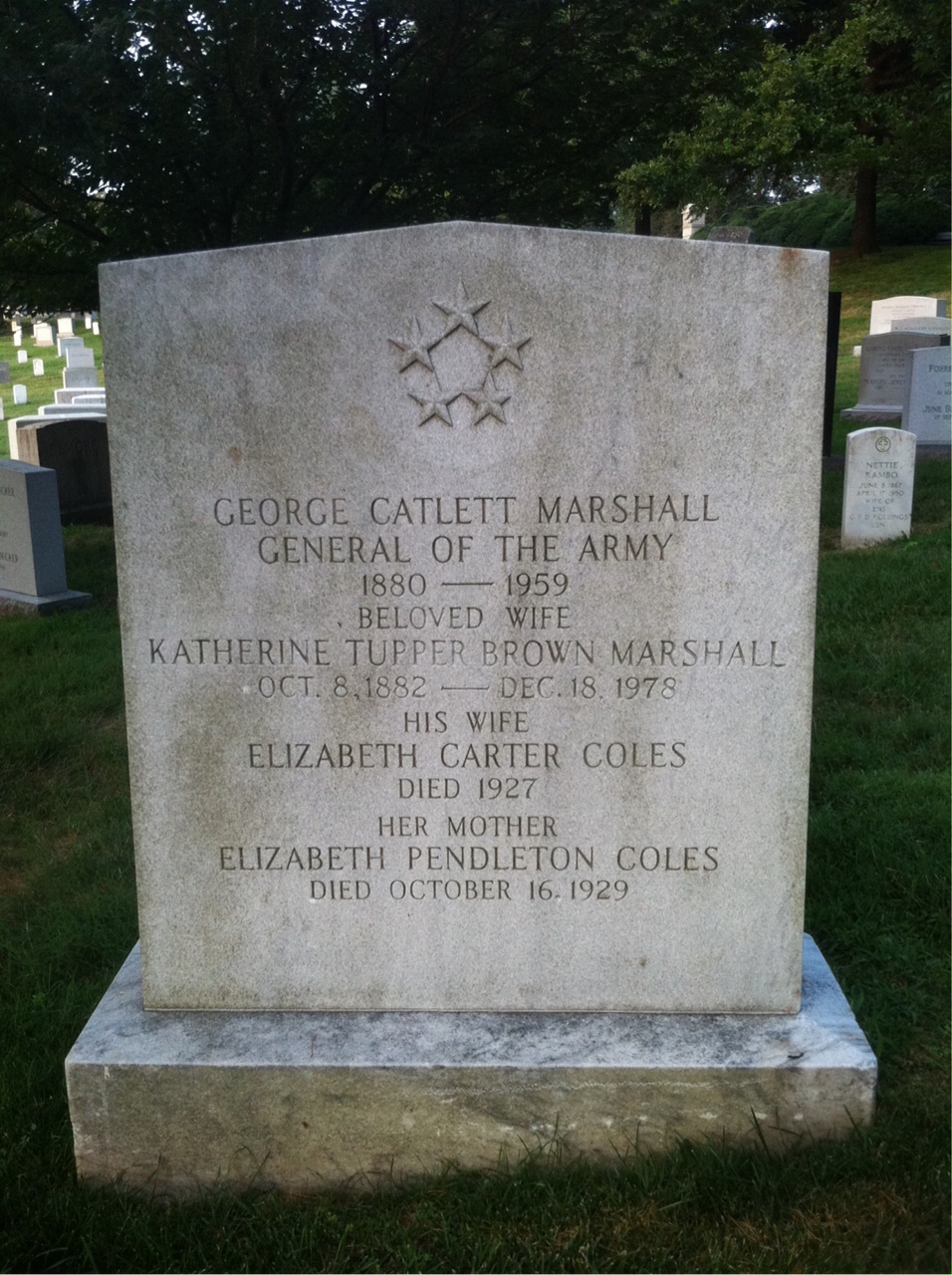
Marshall’s final decades cemented his place in the American pantheon. When he died in October 1959, Arlington National Cemetery became his eternal home—a fitting honor for a man who had devoted eight decades to his country. His legacy endures not in monuments or medals, but in the principles of duty and democratic leadership that continue to shape military and political thought generations later.
More Images
Cemetery Map
View larger map →Satellite overview of the cemetery grounds.