Giovanni Battista Amici 1786 – 1863
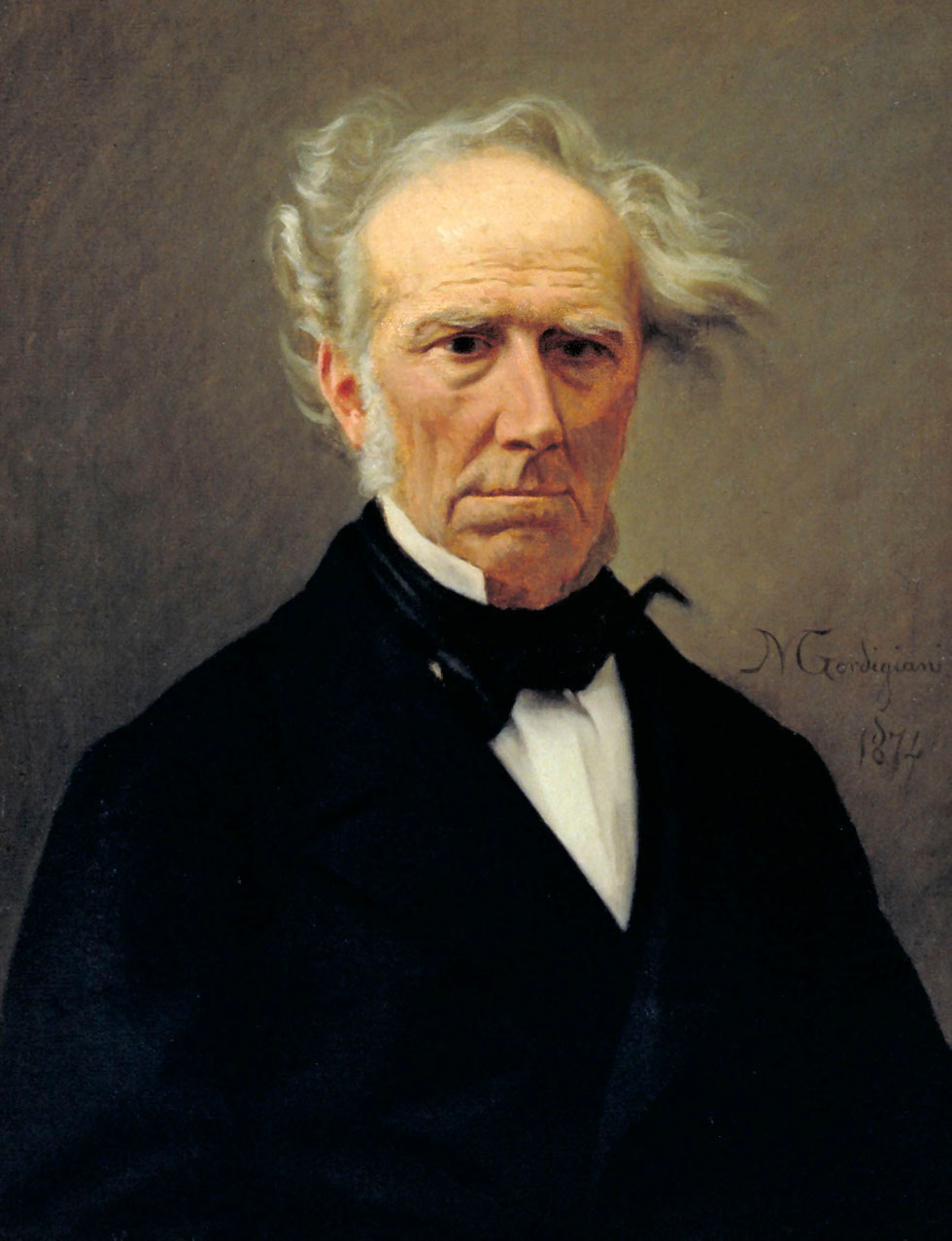
Biography
Born in Modena in 1786, Giovanni Battista Amici became the ultimate Renaissance man of nineteenth-century science—a natural philosopher who refused to stay in one lane. While most scientists specialized, Amici dominated three fields simultaneously: astronomy, microscopy, and botany. His real superpower? An obsession with precision instruments that let humanity see what was previously invisible, whether scanning distant stars or peering into the cellular architecture of plants.
Amici’s reputation rested on his relentless innovation in optical technology. He didn’t just use microscopes and telescopes—he reinvented them, pushing the boundaries of what these instruments could reveal. His work bridged the cosmic and the infinitesimal, proving that the same rigorous curiosity could unlock secrets at every scale of nature. He became the connective tissue of European scientific circles, collaborating across disciplines during an era when polymaths were still celebrated.
He spent his final decades in Florence, continuing his scholarly work until his death in 1863 at seventy-seven. Amici left behind a revolutionary legacy: proof that disciplinary boundaries were artificial, and that curiosity—properly equipped and relentlessly pursued—could transform how humanity sees the world.