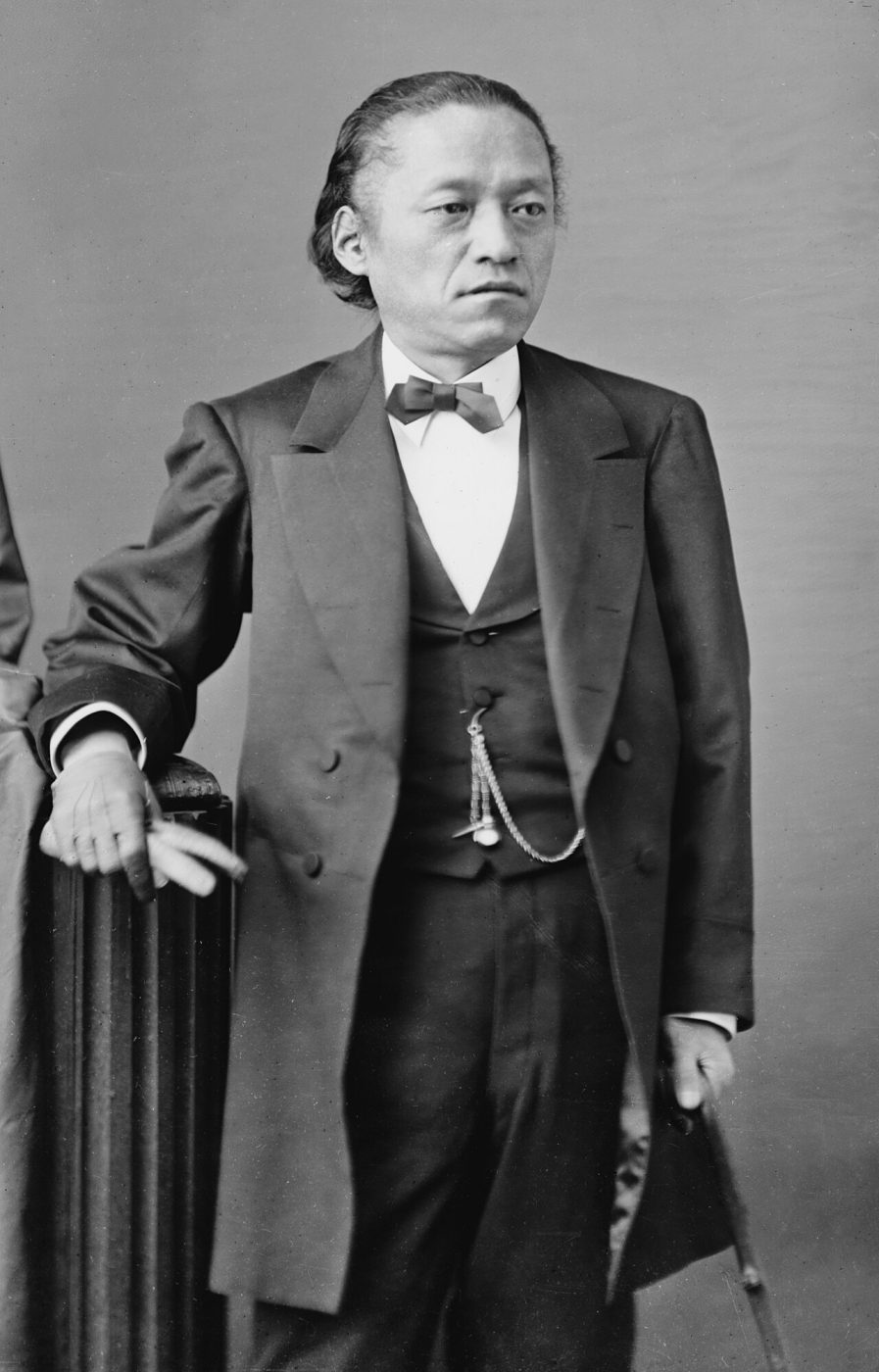
Iwakura Tomomi 1825 – 1883
Biography
Born into nineteenth-century Kyoto during Japan’s most turbulent era, Iwakura Tomomi rose to become one of the nation’s most influential political architects. He navigated the seismic shift from isolated feudal state to modern power with shrewd diplomacy and vision, leaving fingerprints across Japan’s most pivotal decisions during an age of radical transformation.
Iwakura devoted his career to steering his country through uncharted waters, earning his place as a key player in the political machinery that reshaped Japan’s destiny. His work during these formative decades proved instrumental in modernizing the nation’s institutions and charting its course forward—legacy work that defined an era.
The statesman died on July 20, 1883, at fifty-seven, claimed by laryngeal cancer. He found his final resting place at Kaian-ji Temple in Minami-Shinagawa, where his contributions to Japanese history continue to resonate through the ages.
Cemetery Map
View larger map →Satellite overview of the cemetery grounds.