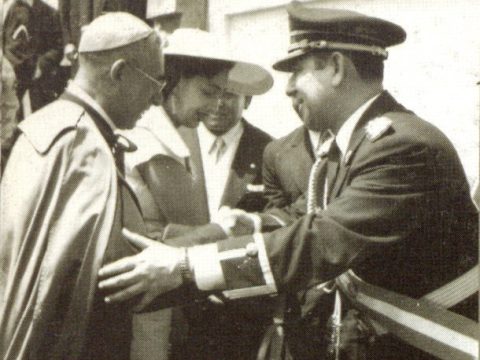
Jigme Dorji Wangchuck 1929 – 1972
Biography
Born into Bhutan’s throne in 1929, Jigme Dorji Wangchuck became the architect of his nation’s passage from medieval isolation into the modern world. As king, he wielded his position not as a relic of the past but as a visionary guide—orchestrating Bhutan’s transformation while fiercely protecting the cultural identity that made it unique. His reign was a high-wire act: embrace progress without surrendering tradition.
What made him legendary wasn’t conquest or spectacle, but something rarer—steering an entire kingdom through seismic change without losing its soul. Wangchuck navigated the treacherous geopolitics of Cold War Asia, modernized infrastructure, and championed education and development. Yet he did it all on Bhutan’s own terms, establishing principles that would define the nation for generations.
His sudden death in Nairobi in 1972 at just 43—a heart attack that cut short a reign of barely a decade—shocked a nation still finding its footing. But those years mattered enormously. Jigme Dorji Wangchuck left behind a kingdom no longer isolated but decidedly itself, a blueprint for sustainable development that still echoes across the Himalayas today.