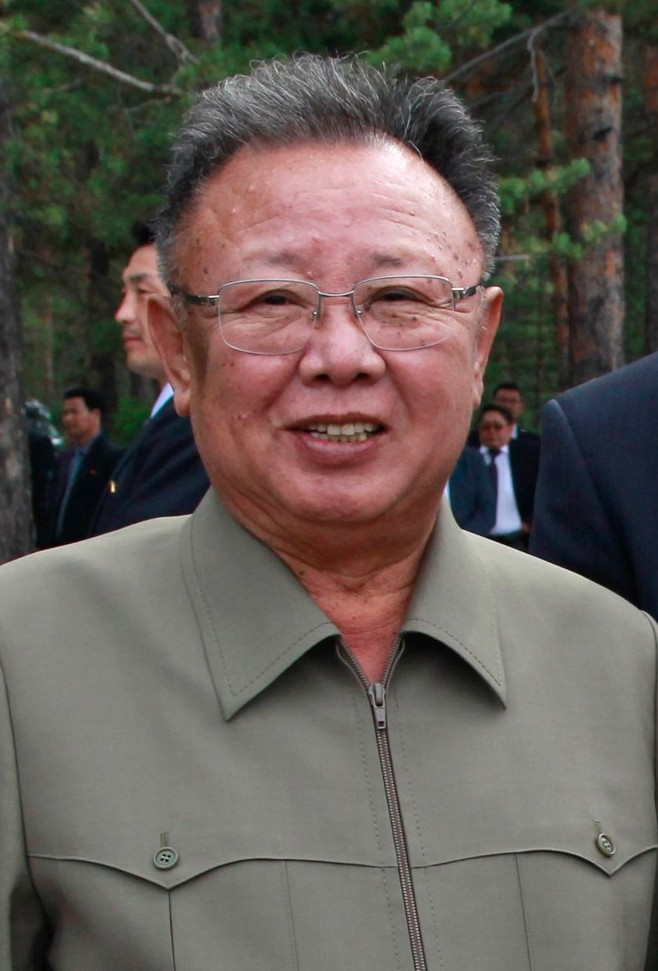
Kim Jong-il 1941 – 2011
Biography
Born in 1941 during Korea’s turbulent division, Kim Jong-il ascended to supreme leadership of North Korea in 1994, inheriting control of a nation locked in Cold War tensions. For seventeen years, he wielded absolute authority over the country’s political machinery, military apparatus, and state ideology, shaping North Korea’s isolated trajectory during a rapidly globalizing world. His tenure defined an era of strict centralization and international standoff that reverberated far beyond the peninsula’s borders.
On December 17, 2011, Kim Jong-il died of a heart attack in Pyongyang, ending a leadership that had fundamentally altered North Korea’s domestic and foreign policy landscape. His death triggered a major governmental transition as power passed to his successor. He was interred at the Kumsusan Palace of the Sun, a site of ceremonial importance in North Korean state tradition. His seventeen-year rule remains a pivotal chapter in modern Korean history and continues to shape regional geopolitics.
Cemetery Map
View larger map →Satellite overview of the cemetery grounds.