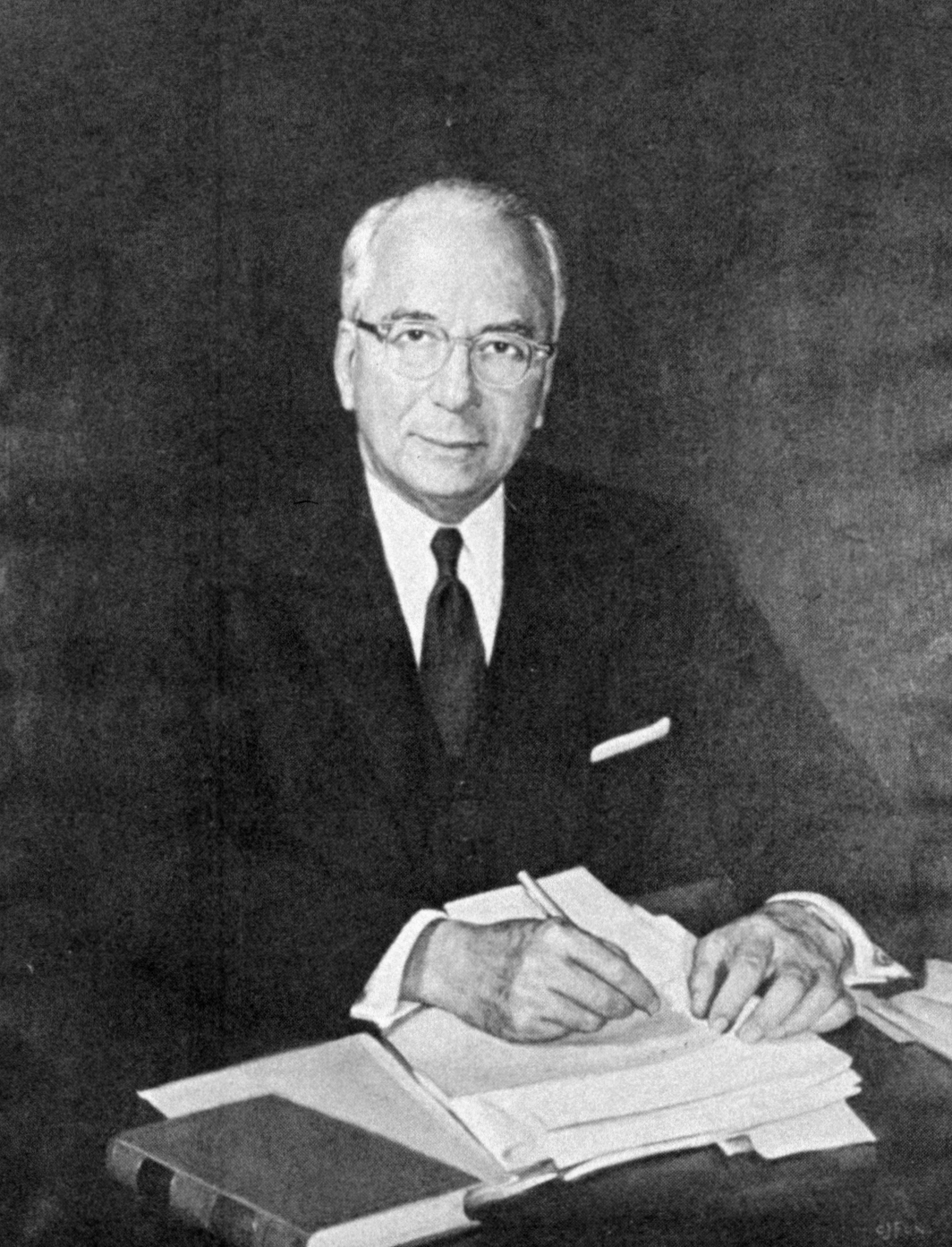
Lewis Strauss 1896 – 1974
Biography
The Charleston-born banker who became the architect of America’s atomic future, Lewis Strauss commanded one of the most powerful positions in Cold War politics as chairman of the U.S. Atomic Energy Commission. His tenure placed him squarely at the nexus of nuclear policy, military strategy, and scientific advancement—decisions that reverberated across the nation’s defense posture and scientific establishment for decades. Strauss wasn’t merely an administrator; he was a shaper of the atomic age itself, wielding influence that extended far beyond bureaucratic walls.
Before cementing his legacy in nuclear policy, Strauss built a formidable career in banking, earning the credentials and institutional clout that would propel him into the highest echelons of government service. His work reflected the ambitions of postwar America—progress, power, and the harnessing of science for national strength. Throughout his career, whether in finance or public service, Strauss embodied the kind of behind-the-scenes institutional leadership that quietly steered twentieth-century American policy.
He died on January 21, 1974, just days before turning seventy-eight, and was buried at Salem Fields Cemetery in Brooklyn.
Cemetery Map
View larger map →Satellite overview of the cemetery grounds.