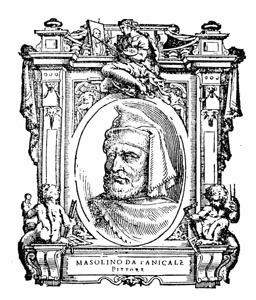
Masolino da Panicale 1383 – 1447
Biography
Masolino da Panicale burst onto the Italian art scene during one of history’s most electric creative moments—the dawning Renaissance. Born in 1383 in his namesake Tuscan town, this painter became a master of transformation, working at the thrilling intersection where Gothic tradition collided with revolutionary new ideas about perspective, anatomy, and the human form. Over six decades, Masolino watched Florence become the birthplace of the modern world, and he was right there, brush in hand, helping to paint it into existence.
What made Masolino’s career truly remarkable was his staying power. While younger artists captured headlines with bold innovations, Masolino remained a steadfast creative force, adapting his craft as humanism reshaped Italian culture. He navigated the seismic artistic shifts of his era—the obsession with classical themes, the newfound realism in depicting the body—proving that longevity itself was a form of innovation. A bridge-builder between two worlds, Masolino died in Florence on January 1, 1447, exactly sixty-four years to the day he was born, leaving behind a legacy as one of the Renaissance’s quieter architects.