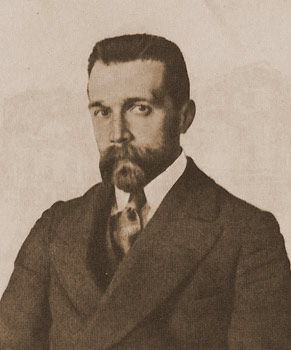
Michael Glinka 1804 – 1857

Biography
Michael Glinka transformed Russian classical music from provincial curiosity into a force that would echo through centuries. Born in 1804 during Russia’s cultural awakening, the composer became the architect of a distinctly Russian sound—one that broke free from European formulas and claimed its own voice. His compositions didn’t just reflect Russian identity; they *created* it, laying the foundation for everything from Mussorgsky to Tchaikovsky.
What made Glinka revolutionary was his refusal to apologize for his roots. He wove Russian folk melodies, Orthodox harmonies, and national character into works of genuine sophistication, proving that “Russian” and “world-class” weren’t mutually exclusive. His influence rippled far beyond his lifetime, inspiring generations of composers who followed his blueprint: that authentic cultural expression could be both deeply personal and universally powerful.
Glinka spent his final years in Berlin, chasing new artistic horizons before his death in 1857 at just fifty-two. His body made the journey home to Tikhvin Cemetery in Saint Petersburg—a fitting homecoming for the man who’d given Russian music its soul. His legacy remains towering: the composer who didn’t just write music, but wrote Russia into the classical canon.
Cemetery Map
View larger map →Satellite overview of the cemetery grounds.