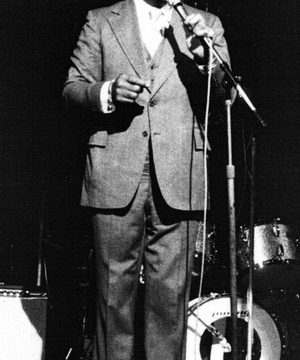
Milton Babbitt 1916 – 2011
Biography
Milton Babbitt revolutionized twentieth-century classical music by fusing mathematical precision with avant-garde composition, creating a radical new language for the instrument and the orchestra. Born in Philadelphia in 1916, this visionary composer didn’t just write music—he fundamentally reimagined how it could be conceived, developing twelve-tone techniques and electronic music innovations that pushed the boundaries of what composers thought possible. His intellectually rigorous yet artistically daring approach earned him legendary status among classical musicians.
A towering figure at Princeton for decades, Babbitt shaped generations of composers through his teaching while maintaining an astonishingly prolific creative output. He wasn’t content to simply compose; he was consumed by the theoretical underpinnings of music itself, crafting a body of work that bridged the gap between pure mathematics and emotional expression. His influence rippled far beyond concert halls, cementing his place as one of America’s most consequential twentieth-century artists.
When Babbitt died in January 2011 at ninety-four, he left behind a staggering legacy: groundbreaking compositions, revolutionary techniques, and an intellectual rigor that permanently altered classical music’s trajectory. His final years in Princeton kept him close to the musical community he’d helped transform.
Cemetery Map
View larger map →Satellite overview of the cemetery grounds.