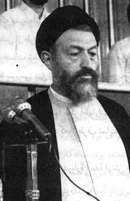
Mohammad Beheshti 1928 – 1981
Biography
The Islamic Revolution needed architects, and Mohammad Beheshti was among its most influential. Born in Isfahan in 1928, Beheshti rose to prominence during Iran’s seismic 1979 upheaval, becoming a commanding ideological force who shaped the revolution’s political and spiritual direction. His scholarly credentials and charismatic vision made him a pivotal figure steering the movement’s trajectory during its most formative moments.
Beheshti’s influence extended beyond rhetoric—he was a decision-maker at the revolution’s helm, helping chart the course for a transformed Iran. His ability to crystallize complex Islamic principles into compelling political action earned him deep respect among revolutionary colleagues and followers who saw in him a rare combination of intellectual rigor and principled commitment.
On June 28, 1981, a terrorist attack in Tehran killed Beheshti, cutting short a life dedicated to revolutionary ideals. His death reverberated across Iran as a profound loss—not merely of a political figure, but of a man whose conviction had animated an entire movement. He was buried at Behesht-e Zahra, Iran’s most sacred cemetery, where his legacy as a revolutionary architect endures.
Cemetery Map
View larger map →Satellite overview of the cemetery grounds.