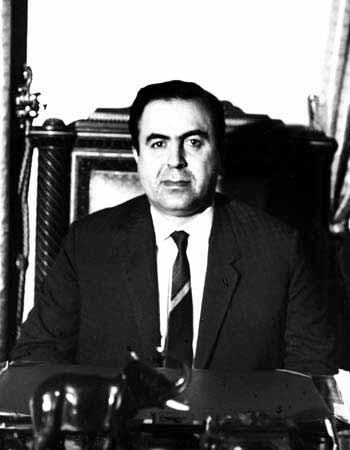
Nureddin al-Atassi 1929 – 1992
Biography
Born into Syria’s turbulent independence movement, Nureddin al-Atassi became a defining political figure of twentieth-century Arab nationalism. Rising through the ranks during one of the Middle East’s most volatile periods, al-Atassi eventually ascended to the presidency of the Syrian Arab Republic, where he steered the nation through ideological upheaval and geopolitical transformation. His leadership embodied the nationalist fervor that reshaped Syria’s identity and governance during an era of unprecedented regional change.
Al-Atassi’s presidency marked a significant chapter in Syria’s political evolution, reflecting the complex currents of Arab politics that dominated the latter half of the century. Though his time in power eventually concluded, his influence on Syrian political development remained substantial—a legacy shaped by decades navigating the nation’s most challenging historical transitions. His life traced nearly seven decades of transformative events across the Arab world, from colonial struggles to Cold War politics.
In his final years, al-Atassi retreated from public life, settling in France where he lived quietly until his death in December 1992. He left behind a complex political legacy as a key architect of modern Syria during its most formative period.