Oswiu 612 – 670
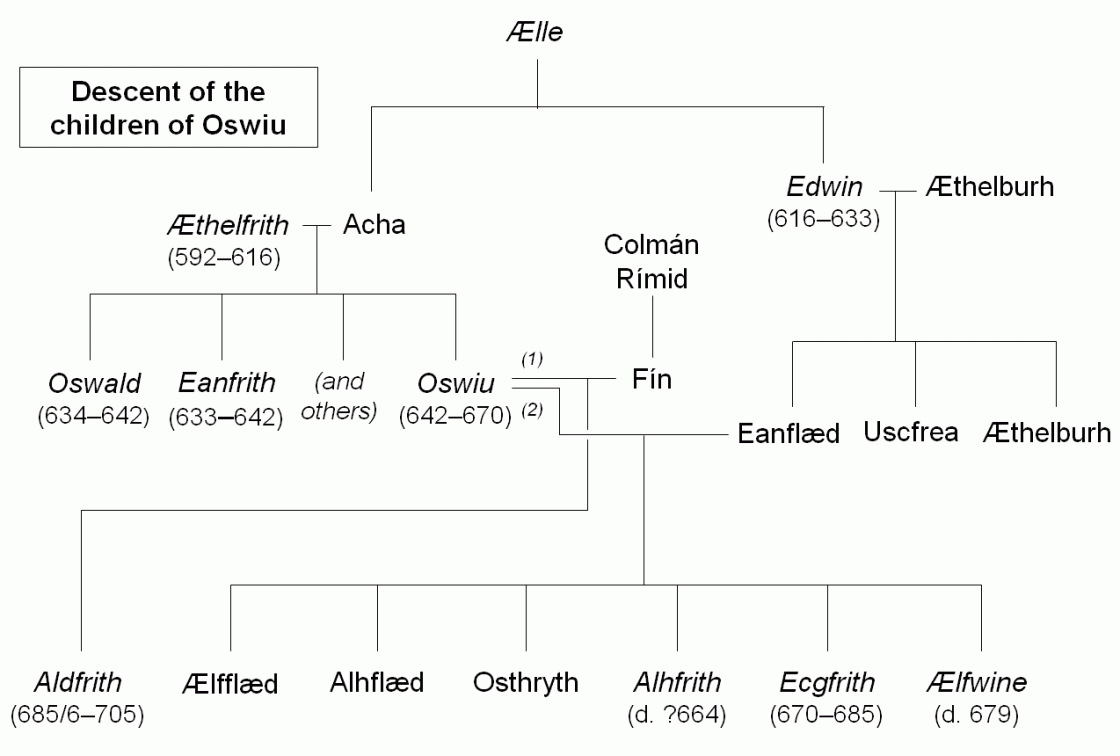
Biography
Oswiu wasn’t just a 7th-century king—he was the architect of Christian England. Born in 612, this Anglo-Saxon powerhouse spent nearly six decades consolidating his grip on northern Britain while shepherding the explosive growth of Christianity across his realm. In an era when most rulers were still figuring out what faith meant, Oswiu made it the cornerstone of his authority, weaving religious authority and political muscle into something revolutionary.
His reign became legendary for a reason: Oswiu didn’t just rule; he shaped institutions that would outlast empires. He presided over a transformative period when monasteries were becoming centers of learning, culture, and power. Churches rose where pagan temples once stood, and with them came literacy, art, and the infrastructure of organized society. His influence rippled through the tumultuous decades of the 7th century, a time when weak kings crumbled and visionaries thrived.
When Oswiu died on February 18, 670, the Anglo-Saxon world mourned a titan. His final resting place at Whitby Abbey—one of medieval Britain’s most storied religious centers—says everything about his legacy. He didn’t just witness England’s transformation into a Christian kingdom; he orchestrated it. That’s the kind of impact that echoes through centuries.
Cemetery Map
View larger map →Satellite overview of the cemetery grounds.