
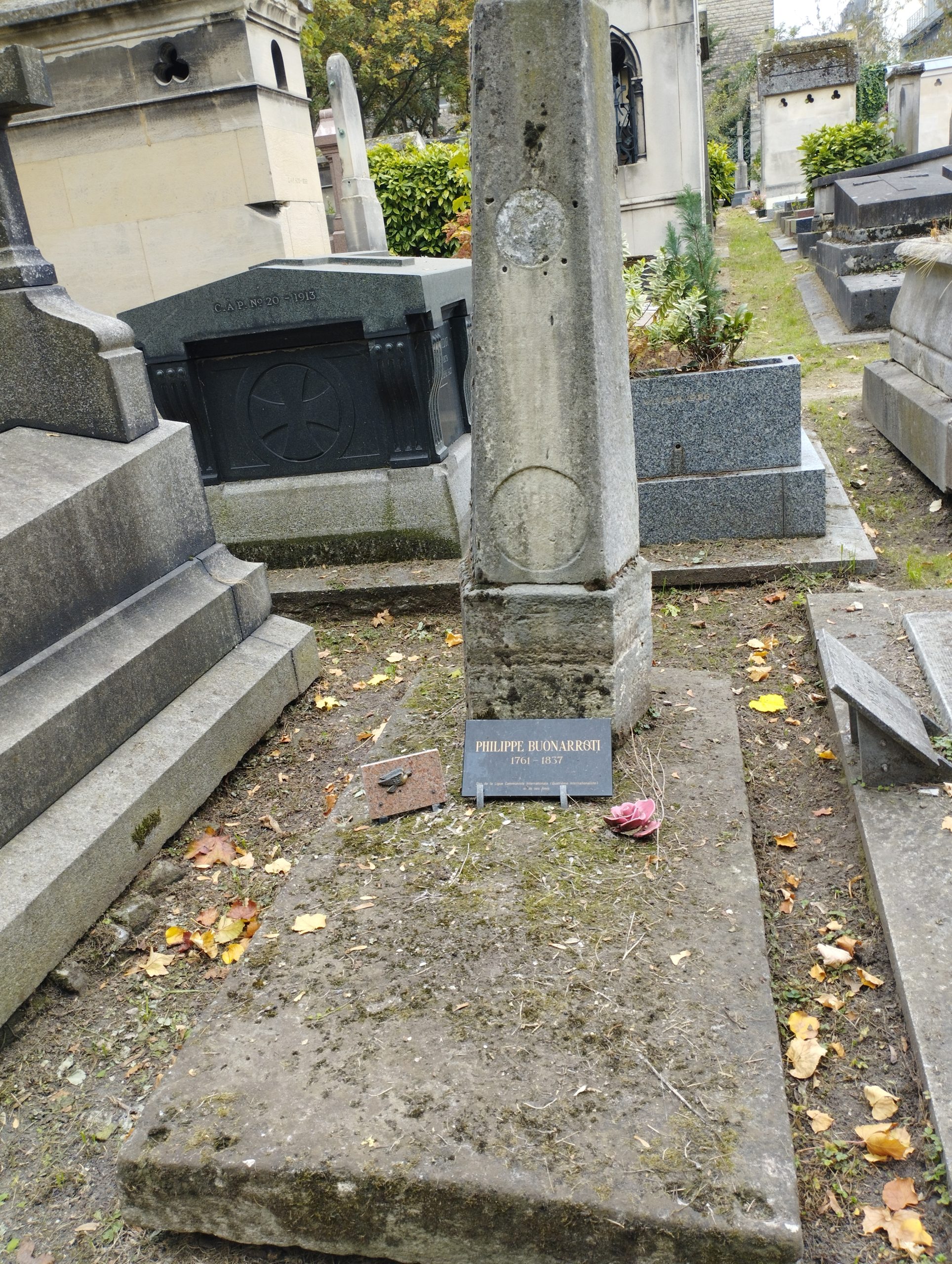
Philippe Buonarroti 1761 – 1837

Biography
A visionary ahead of his time, Philippe Buonarroti emerged from Enlightenment-era Italy as one of the nineteenth century’s most influential utopian socialist thinkers. Born in Pisa in 1761, he spent a seventy-six-year lifetime crusading for radical social reform at a pivotal moment when Europe was reimagining itself. Buonarroti’s pen proved mightier than most swords—his writings and activism became intellectual fuel for progressive movements across the continent, inspiring generations who dared to dream of a more equitable world.
Beyond pamphlets and public discourse, Buonarroti channeled his commitment to enlightenment ideals through freemasonry, building networks of like-minded reformers bound by shared visions of brotherhood and justice. His work married theory with action, seamlessly weaving together philosophical inquiry and hands-on activism in service of human dignity.
By the time Buonarroti died in Paris in 1837, his ideas had already taken root across Europe, becoming touchstones for those fighting for social transformation. Buried in the storied grounds of Montmartre Cemetery, he left behind a legacy that proved enduring: proof that conviction, principled persistence, and faith in human progress could reshape the intellectual landscape of an era.
More Images
Cemetery Map
View larger map →Satellite overview of the cemetery grounds.


