Ralph H. Fowler 1889 – 1944
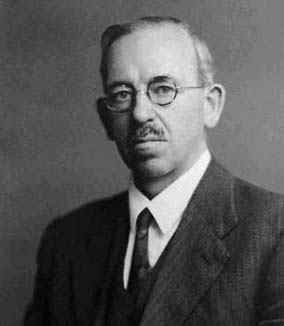
Biography
Born in rural Roydon in 1889, Ralph H. Fowler emerged as a pivotal figure in early twentieth-century physics during an era of seismic scientific revolution. Based at Cambridge University, one of the world’s premier research institutions, Fowler immersed himself in the transformative breakthroughs that fundamentally rewired our understanding of matter and energy. He became woven into the intellectual fabric of Cambridge’s legendary scientific community precisely when physics was shedding its classical certainties and embracing radical new theories that would define modern science.
Fowler’s career unfolded across decades of extraordinary discovery—a period that saw quantum mechanics emerge and reshape the discipline entirely. Working amid both peacetime innovation and the upheaval of World War II, he dedicated himself to advancing human knowledge at the frontier of physical science. His life embodied the Cambridge tradition of rigorous inquiry and intellectual ambition that characterized mid-century British physics.
Fowler died in Cambridge in July 1944 at fifty-five, leaving behind a legacy rooted in his years of devoted scientific pursuit during one of the most consequential periods in the history of physics.