Rembrandt 1606 – 1669
Biography
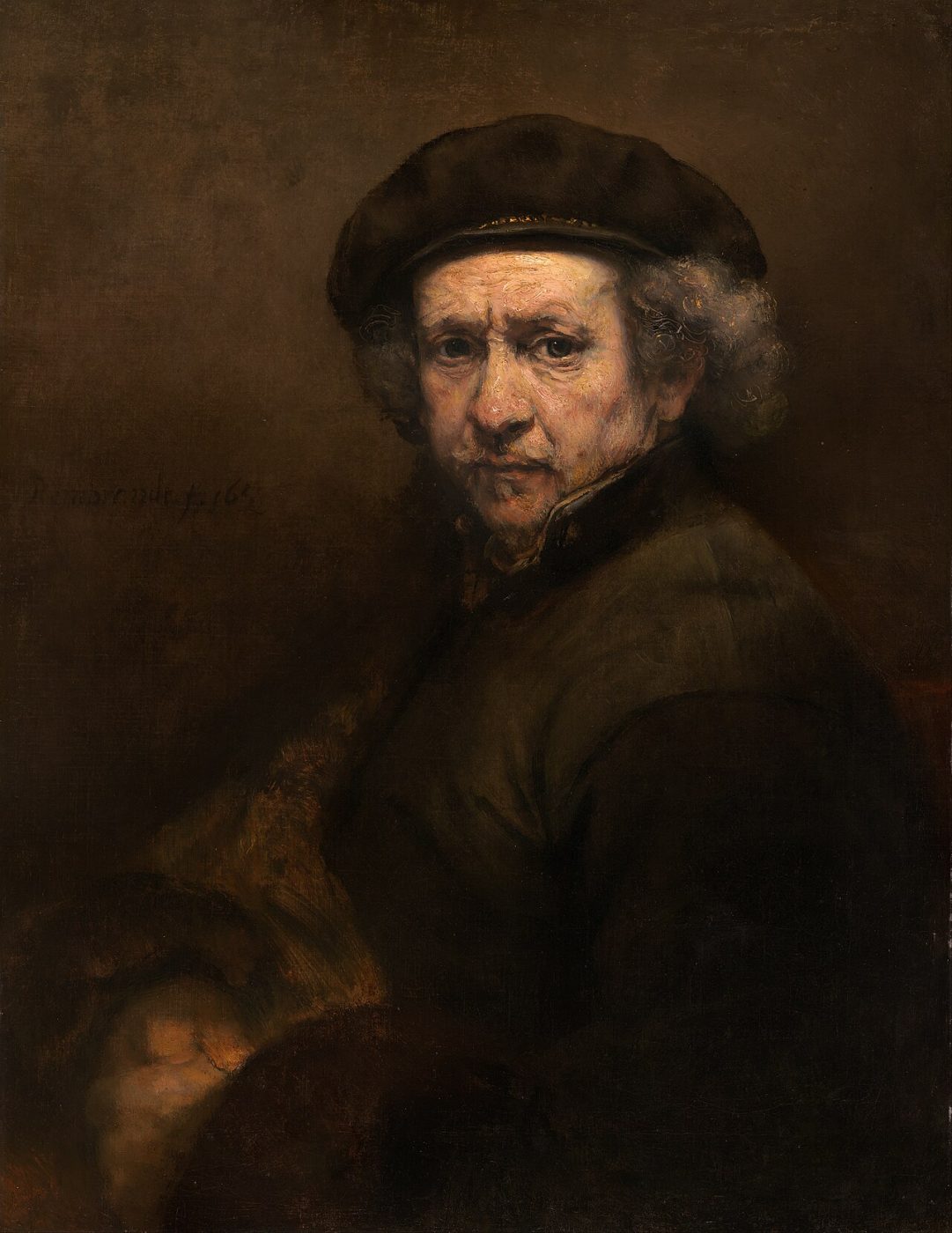
Rembrandt revolutionized art by mastering light itself. Born in Leiden in 1606, this Dutch virtuoso became the era’s most celebrated painter and printmaker, wielding brush and etching needle with unmatched technical brilliance. His genius lay in capturing not just faces but souls—whether rendering grand historical epics or intimate psychological portraits, he infused every work with emotional depth that felt startlingly real.
His Amsterdam studio became legendary, attracting patrons and apprentices seeking to study under a master who could manipulate shadow and luminescence like no other. Rembrandt didn’t just paint his subjects; he excavated their humanity. For decades, he commanded the art world’s attention, creating works that balanced technical virtuosity with raw emotional power—a combination that proved intoxicating to audiences then and now.
When Rembrandt died in Amsterdam on October 4, 1669, he was buried at the Westerkerk, one of the city’s most distinguished churches. His legacy transcends centuries: a revolutionary who proved that art’s highest calling was capturing truth through light, shadow, and the ineffable mysteries of human experience.
More Images

Cemetery Map
View larger map →Satellite overview of the cemetery grounds.