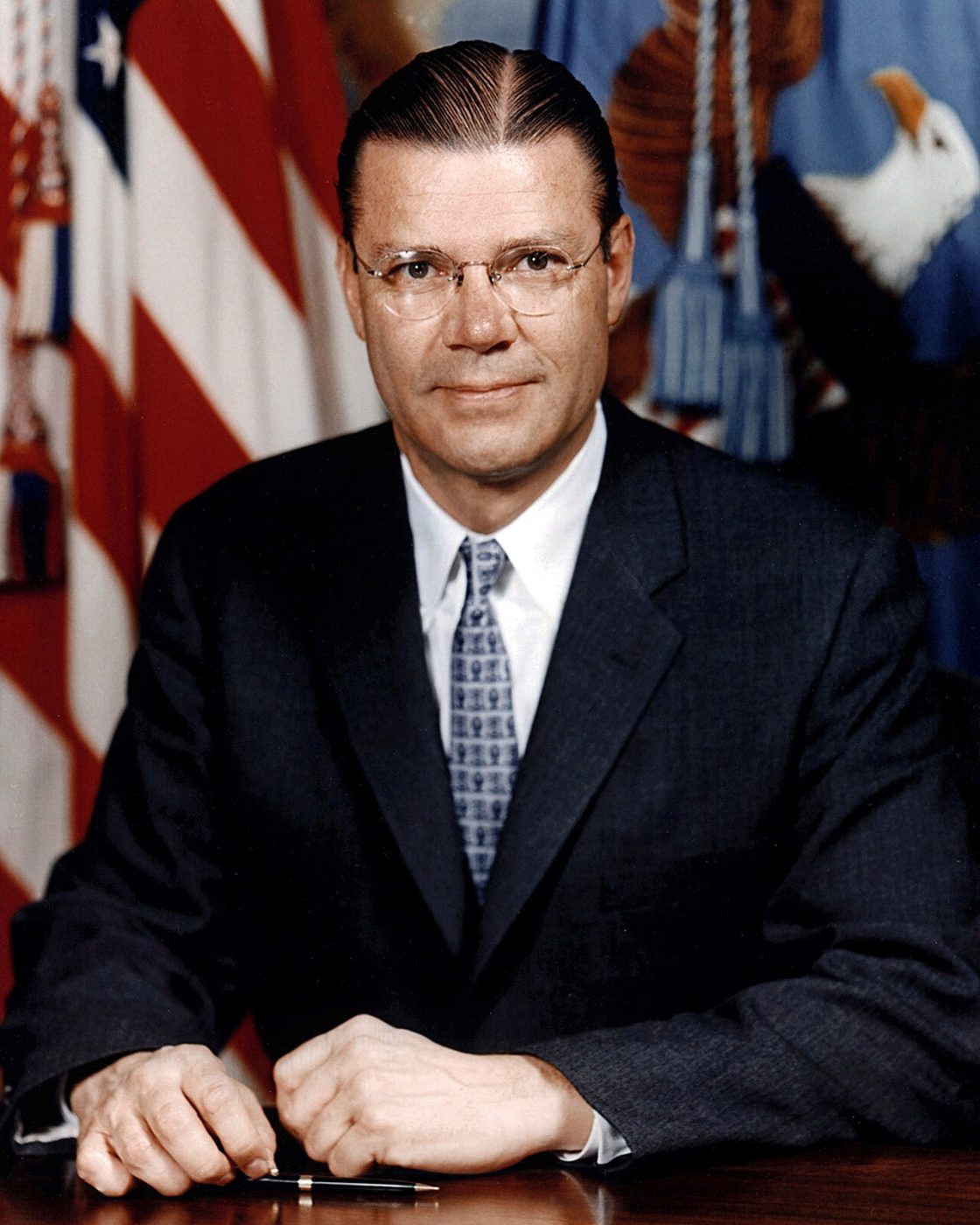
Robert McNamara 1916 – 2009
Biography
A brilliant architect of Cold War strategy, Robert McNamara rose from corporate success at Ford Motor Company to become one of America’s most influential—and controversial—Defense Secretaries. Appointed by President Kennedy in 1961, McNamara brought his trademark analytical rigor to the Pentagon, applying systems analysis and data-driven decision-making to military planning. His tenure spanned the Cuban Missile Crisis and the escalation of U.S. involvement in Vietnam, decisions that would define his legacy and spark decades of debate about his leadership.
McNamara’s approach was revolutionary for its time: he believed complex problems could be solved through numbers, efficiency, and rational planning. Yet this same philosophy faced fierce criticism as the Vietnam War dragged on, with many questioning whether raw data could capture the human cost of military decisions. After leaving the Defense Department, he pivoted to international development as president of the World Bank, continuing his quest to apply expertise to global challenges.
A towering figure who witnessed and shaped some of the twentieth century’s most consequential moments, McNamara embodied both the promise and perils of technocratic leadership. He died in Washington, D.C., on July 6, 2009, and was buried at Arlington National Cemetery, honored for his decades of public service.
Cemetery Map
View larger map →Satellite overview of the cemetery grounds.