Samuel Scheidt 1587 – 1654
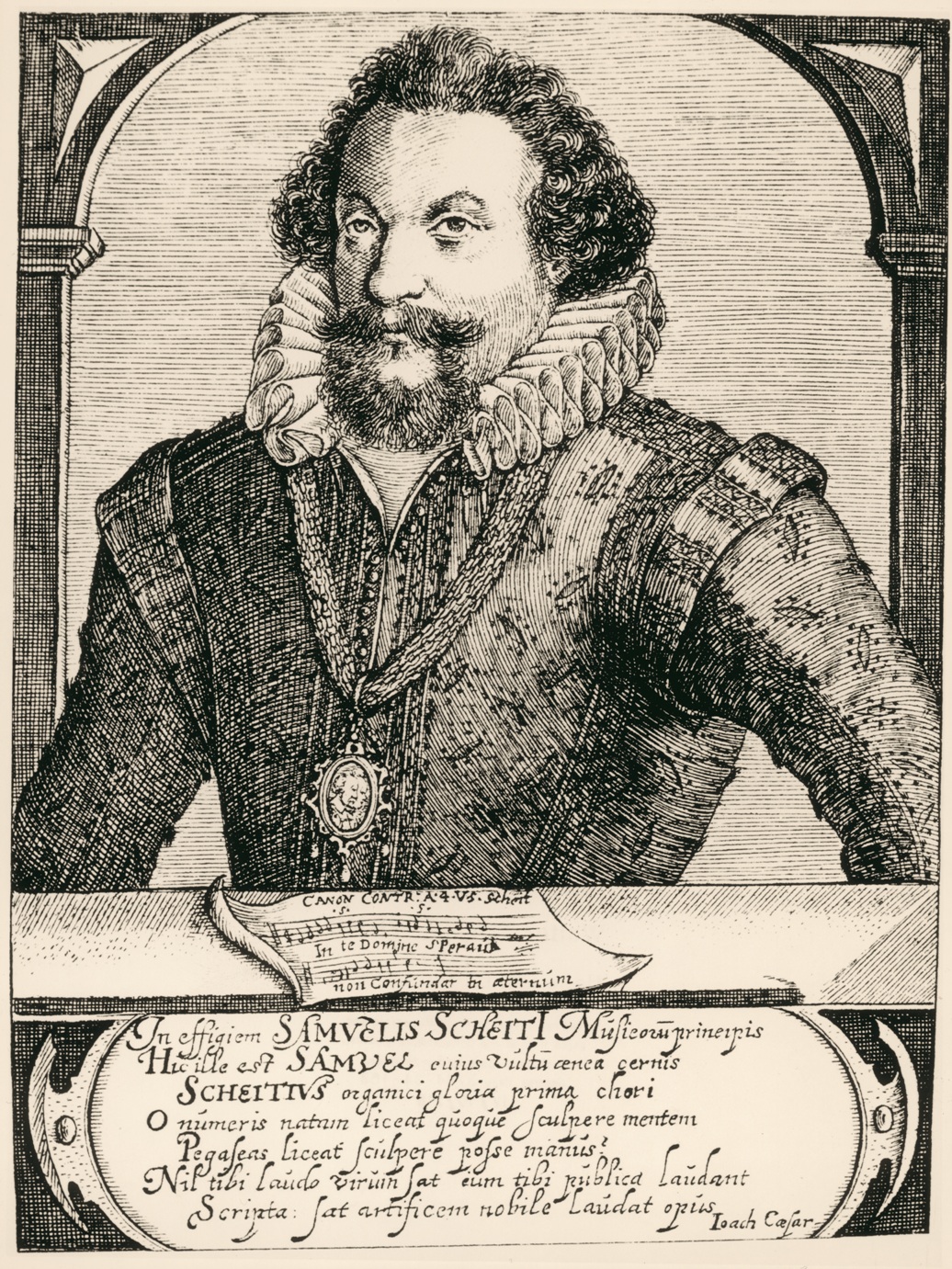
Biography
Samuel Scheidt revolutionized organ music in seventeenth-century Germany, establishing himself as a towering figure in Baroque composition when the instrument itself was still finding its voice. Born in Halle in 1587, Scheidt became the city’s most influential musical force, commanding the organ bench with virtuosic skill while crafting works that pushed compositional boundaries far beyond his contemporaries’ expectations.
Throughout his sixty-six-year career, Scheidt mastered multiple roles—composer, organist, and mentor—leaving fingerprints across every aspect of German musical life. His compositions, particularly his organ works and sacred music, demonstrated technical brilliance and emotional depth that influenced generations of musicians. As a dedicated teacher in his native Halle, he passed his innovative techniques and artistic vision directly to rising composers, ensuring his legacy lived on through his students.
Scheidt’s decades-long residency in Halle made him an architectural cornerstone of German Baroque music. When he died in 1654 at nearly seventy, he left behind a body of work that had fundamentally shaped how composers approached the organ and sacred composition—achievements that secured his place among the era’s most consequential musical innovators.