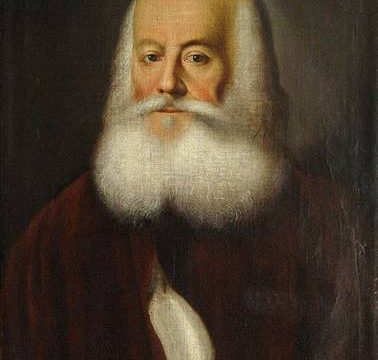
Sir George Stokes, 1st Baronet 1819 – 1903

Biography
Born in rural Ireland in 1819, George Stokes became one of the nineteenth century’s most influential scientific minds, transforming how we understand the physical world. His groundbreaking work in mathematics and physics earned him a baronetcy—a rare honor for a scientist—and cemented his status as a towering intellect among his peers. Stokes didn’t just theorize; he fundamentally advanced human knowledge, leaving fingerprints across multiple disciplines that shaped modern science.
Cambridge became his kingdom. Settling there, Stokes didn’t retreat into solitude but actively molded generations of students, passing the torch of scientific rigor to younger minds hungry for discovery. The scholarly community revered him, recognizing that his decades-long dedication to investigation had unlocked secrets about how nature actually works. When Stokes died in 1903 at eighty-three, he left behind not just published findings but an entire intellectual tradition.
Mill Road Cemetery in Cambridge holds his remains, a quiet resting place for a man whose ideas never stopped moving. Stokes proved that meticulous thinking and relentless curiosity could reshape civilization—a legacy that continues to inspire scientists today.
Cemetery Map
View larger map →Satellite overview of the cemetery grounds.