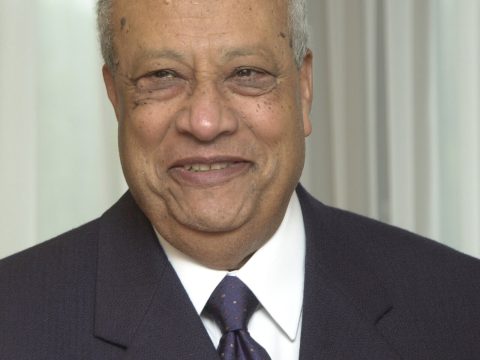
Taqiuddin al-Nabhani 1909 – 1977

Biography
Born in Haifa during the Ottoman Empire’s twilight, Taqiuddin al-Nabhani emerged as one of the twentieth century’s most influential Islamic political theorists. His name became synonymous with a bold intellectual project: reimagining Islamic governance for the modern era. Al-Nabhani channeled decades of theological study into founding Hizb ut-Tahrir, an organization that crystallized his vision for faith-based political activism and attracted followers across the Islamic world, cementing his status as a transformative ideological force.
Al-Nabhani’s writings articulated a distinctive framework for understanding Islam’s relationship to contemporary statecraft and society—ideas that would reverberate through generations of scholars and activists. His work transcended academic circles, sparking debates that shaped political movements from the Middle East to Central Asia and beyond. Spent his final years in Beirut, where he died in 1977, al-Nabhani left behind an extensive corpus of theological and political texts. His legacy endures as scholars continue wrestling with the questions he posed about modernity, faith, and political order.
Cemetery Map
View larger map →Satellite overview of the cemetery grounds.