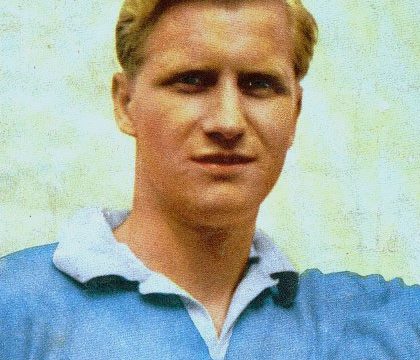
Teizo Takeuchi 1908 – 1946

Biography
Teizo Takeuchi was a pioneer of Japanese football during a pivotal era when soccer was just taking root in the nation. Born in Tokyo in 1908, he came of age during the 1920s and 1930s—a transformative period when Japan was embracing modern athletic pursuits. As one of the sport’s earliest dedicated players, Takeuchi helped lay the groundwork for what would eventually become a thriving football culture, contributing to the game’s foundational years when organized soccer remained a novel pursuit.
Playing during Japan’s most turbulent decades, Takeuchi embodied the spirit of athletic ambition even as his nation underwent seismic political and social upheaval. His participation in the early development of Japanese football represented a quiet persistence—a commitment to building something lasting amid uncertainty. Though detailed records of his specific achievements remain sparse, his place in the sport’s pioneer generation secured his legacy as part of the vanguard that established soccer’s roots in Japan.
Takeuchi’s life ended in the Soviet Union on April 12, 1946, just as Japan was beginning its postwar reconstruction. He died at 37, having lived through imperial expansion, global conflict, and occupation. His contributions to early Japanese football, though often eclipsed by the era’s dramatic historical events, remain a testament to the enduring human drive to build and compete.