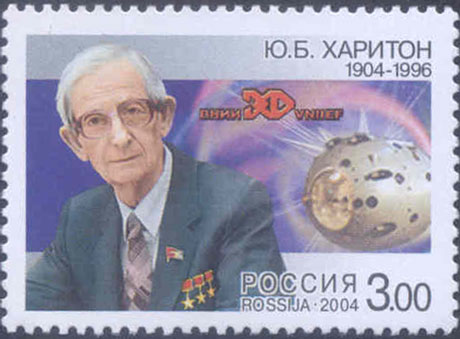
Yulii Khariton 1904 – 1996
Biography
A towering figure in twentieth-century physics, Yulii Khariton dedicated nearly a century to Soviet science, becoming one of the era’s most consequential researchers. Born in Saint Petersburg in 1904 during Russia’s revolutionary ferment, Khariton rose to prominence through decades of rigorous scientific inquiry that shaped the Soviet Union’s extraordinary advancement in physics. His career spanned from the early decades of Soviet science through the Cold War’s most defining moments, positioning him as a central figure in the nation’s scientific establishment.
Khariton’s unwavering commitment to his work allowed him to witness and participate in the dramatic evolution of physics throughout the twentieth century. From the transformative 1920s through the late Cold War era, he remained a steadfast presence in the Soviet scientific community, contributing significantly to the field during a period of unprecedented technological and theoretical breakthroughs. His longevity—ninety-two years—mirrored the dramatic changes he observed and helped shape.
When Khariton passed away on December 18, 1996, the scientific world lost a living connection to an extraordinary epoch. Buried at Moscow’s prestigious Novodevichy Cemetery, his final resting place reflects the profound respect accorded to those who fundamentally advanced human knowledge during history’s most transformative century.
Cemetery Map
View larger map →Satellite overview of the cemetery grounds.