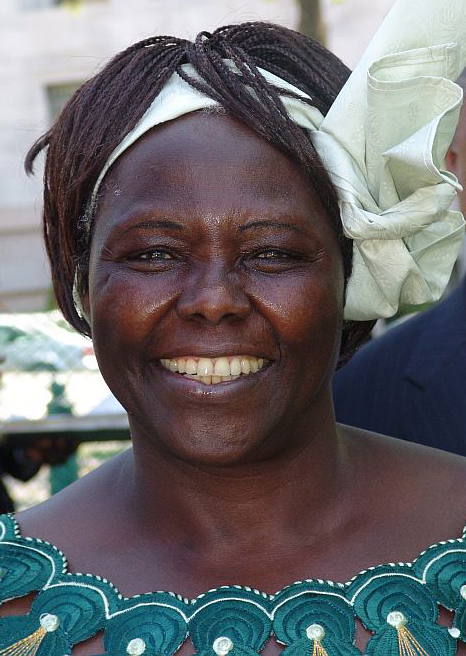
Wangari Muta Maathai 1940 – 2011
Biography
She planted trees and harvested revolutions. Wangari Maathai transformed Kenya’s environmental movement into a global force, proving that conservation and human rights were inseparable. Born in Nyeri in 1940, she channeled her scientific training and fierce moral conviction into the Green Belt Movement, which mobilized ordinary Kenyans—especially women—to restore their land while challenging political oppression. Her refusal to back down made her a symbol of resistance against dictatorship.
In 2004, the Nobel Peace Prize committee recognized what the world already knew: Maathai was irreplaceable. The award crowned decades of activism that linked deforestation to poverty, corruption, and tyranny. She had endured imprisonment, beatings, and exile, yet emerged unbowed. Her eloquence on the global stage inspired a generation to see environmental justice as the ultimate political act.
Maathai died of ovarian cancer on September 25, 2011, but her impact only deepened. The Green Belt Movement she founded continues planting millions of trees across Africa. She remains the gold standard for activism that refuses false choices—fighting for the forest, democracy, and human dignity all at once.