Louis II of Italy 825 – 875
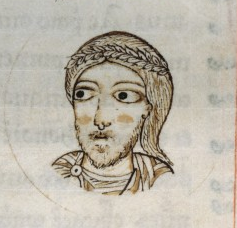
Biography
Born into imperial destiny, Louis II ruled the Holy Roman Empire’s Italian territories for over three decades, wielding formidable power across one of medieval Europe’s most coveted regions. Coming of age during the ninth century’s turbulent political landscape, he inherited a realm still radiating the legacy of Charlemagne’s vast domain—a position demanding constant navigation of competing interests and territorial fragmentation.
For more than thirty years, Louis II commanded respect through sheer force of imperial authority, holding sway over diverse Italian populations during an era when centralized power was far from guaranteed. His death in August 875, struck down by disease while in Ghedi, ended a reign that had fundamentally shaped the Holy Roman Empire’s Italian character. The grandeur of his final resting place—the Basilica of Sant’Ambrogio in Milan, among Christendom’s most sacred sites—spoke volumes about his stature, cementing his position within the lineage of Europe’s most consequential medieval rulers.
Cemetery Map
View larger map →Satellite overview of the cemetery grounds.