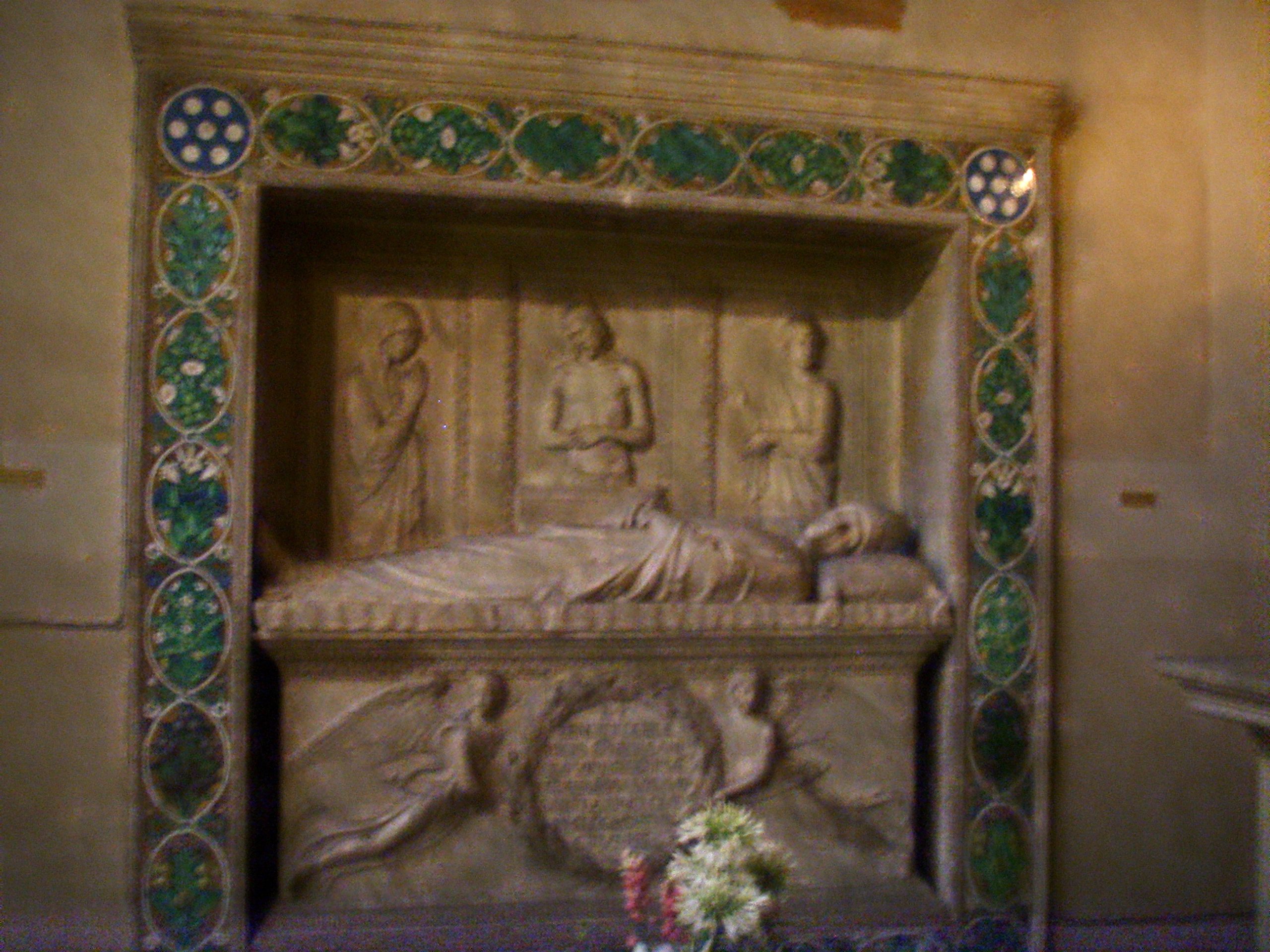
Luca della Robbia 1399 – 1482

Biography
Renaissance Florence found its master sculptor in Luca della Robbia, whose innovative glazed terracotta works revolutionized how artists thought about ceramic sculpture. Born in 1399 into the heart of the Italian artistic awakening, della Robbia spent over eight decades perfecting a technique that would define an era—transforming humble clay into luminous, colorful masterpieces that adorned churches and palaces across the city. His glazed reliefs became the signature aesthetic of Florentine art, blending technical brilliance with accessible beauty.
What set della Robbia apart wasn’t just his skill with the kiln—it was his vision of sculpture as something both monumental and intimate. Working through the height of the Renaissance, he created works that merged the classical ideals sweeping through Florence with his own innovative spirit. His studio became a powerhouse of artistic production, influencing generations of sculptors and establishing glazed terracotta as a legitimate, prestigious art form.
When della Robbia died in 1482 at eighty-two, he left behind a transformed artistic landscape. His legacy proved enduring: the distinctive blue-and-white glazed pieces bearing his family name would become synonymous with Renaissance Florence itself, cementing della Robbia as one of history’s most influential sculptors.
More Images